en
 Français
 Español

Hydrophobic vs Hydrophilic: How Nonwoven Fabrics Handle Water in Real Applications
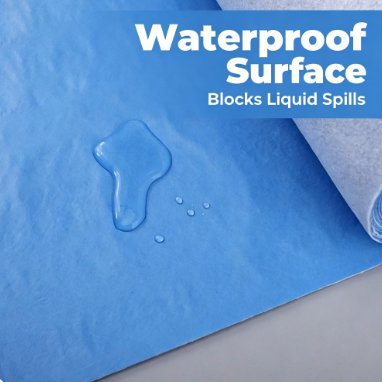
2026-10-22When a drop of water hits a nonwoven geotextile, you can see the answer in one second. If the drop stays rounded and rolls off, the surface is hydrophobic. If it spreads into the fabric, the surface is hydrophilic. This visual test is the foundation of a spec decision that affects drainage, concrete curing, subgrade anti-seepage, and temporary floor protection.
For nonwoven fabric buyers, the key is to match the surface behavior to the function. Hydrophilic fabrics help water do its job – wetting concrete or passing through filter layers. Hydrophobic fabrics keep water from doing damage – blocking seepage and stopping paint or stains.
What Hydrophobicity and Hydrophilicity Actually Mean
Materials scientists use the static water contact angle as the dividing line. Place a droplet on a flat surface and measure the angle between the droplet edge and the surface. A surface with a contact angle above 90 degrees is hydrophobic. A surface below 90 degrees is hydrophilic.
Hydrophobic means the surface resists water. Hydrophilic means the surface attracts water. The 90-degree contact angle is the practical boundary.
The physical reason is molecular attraction. Hydrophilic surfaces contain polar groups that form hydrogen bonds with water molecules, pulling the droplet outward. Hydrophobic surfaces lack these polar groups, so water molecules prefer to stick to each other and form a compact bead.
In practice, the difference is not just theoretical. It tells you whether a fabric will absorb a liquid, let it flow through, or block it completely.
How These Properties Appear in Nonwoven Fabrics
Nonwoven fabrics are built from fibers such as polyester, polypropylene, or a blend. The base polymer already influences water behavior. Polyester has some polar character from its ester groups and tends to be more hydrophilic than polypropylene, which is naturally hydrophobic. However, the manufacturing process – needle punching, thermal bonding, lamination, and finishes – can shift the actual behavior.
Hydrophilic Nonwovens for Drainage and Moisture Management
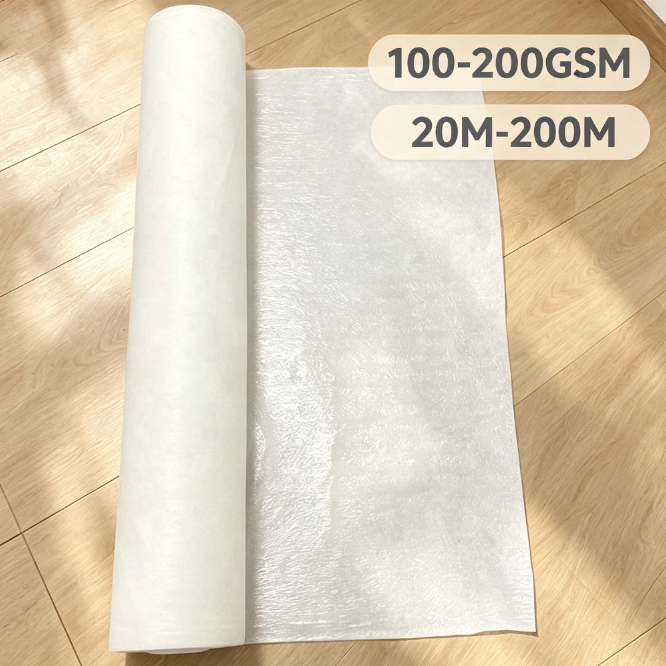
In road drainage and filtration, a fabric must allow water to pass while retaining soil particles. A high-permeability nonwoven geotextile relies on an open needle-punched structure and a surface that lets water wet the fibers. That hydrophilic characteristic reduces the chance of surface clogging and maintains flow capacity.
For example, a high-permeability white non-woven geotextile for road drainage is designed to handle rapid water flow, making it a reliable choice for base layers, shoulder drains, and separation applications where the fabric must not choke off water movement.
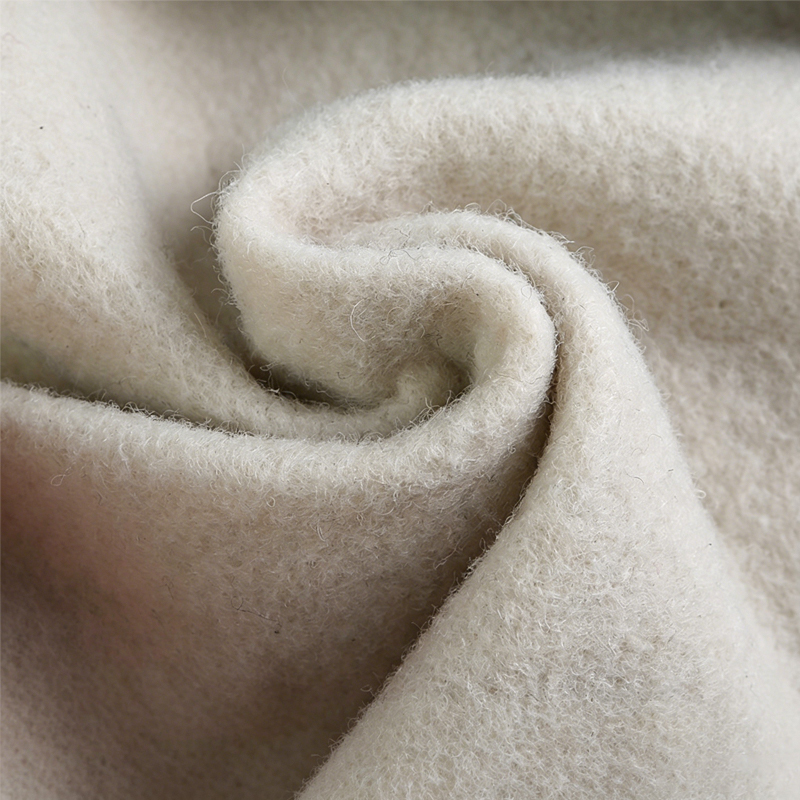 High-Permeability White Nonwoven Geotextile for Road DrainageThis needle-punched PET geotextile features a three-dimensional pore structure for rapid water flow while retaining fine soil particles, making it ideal for subgrade and slope drainage systems to prevent clogging and improve project durability.View Product →
Hydrophobic Nonwovens for Sealing and Spill Protection
When the goal is to prevent water from entering, hydrophobic behavior is essential. A composite geomembrane with a hydrophobic film layer creates a high-contact-angle barrier. Liquid water cannot pass through, while the nonwoven carrier provides strength and puncture resistance. This is why anti-seepage systems rely on hydrophobic film layers for subgrade and landfill protection.
For highway subgrade construction, a three-layer geocomposite for highway subgrade anti-seepage combines a nonwoven fabric, a film, and a second fabric or coating to deliver both strength and moisture blocking. The hydrophobic top and bottom surfaces keep water from attacking the road foundation.
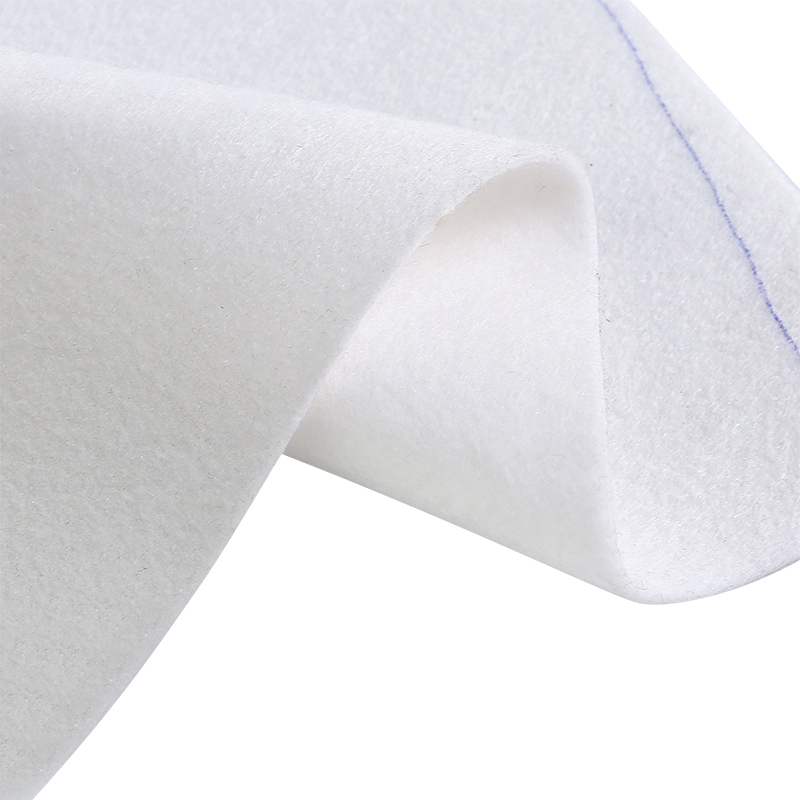 Three-Layer Geomembrane Geocomposite for Highway Subgrade Anti-SeepageCombining nonwoven layers with a central HDPE film, this composite provides reinforcement and a continuous barrier against water intrusion, enhancing subgrade stability and preventing erosion in highway and soft soil projects.View Product →
Comparing Hydrophobic and Hydrophilic Materials Side by Side
The table below summarizes the practical differences that matter when selecting nonwoven fabrics for engineering and protective applications.
| Property | Hydrophobic | Hydrophilic |
|---|---|---|
| Water contact angle | Greater than 90 degrees | Less than 90 degrees |
| Water behavior | Beads and repels liquid | Spreads and wets fibers |
| Typical nonwoven role | Anti-seepage, spill protection, moisture barrier | Drainage, filtration, concrete curing, moisture retention |
| Common material types | PE film coating, polypropylene | Needle-punched polyester, treated nonwovens |
How to Choose the Right Nonwoven for Your Project
Selecting a hydrophobic or hydrophilic nonwoven starts with the water challenge. Define whether you need to move water, hold water, or keep water out. Then check three specifications: GSM, fabric structure, and surface treatment.
For drainage and filtration, look for an open structure with adequate permeability. The fiber surface should allow water to wet and pass. For concrete curing, the fabric needs enough water-holding capacity to keep the concrete surface damp. For anti-seepage, the fabric needs a continuous film or coating that resists water penetration.
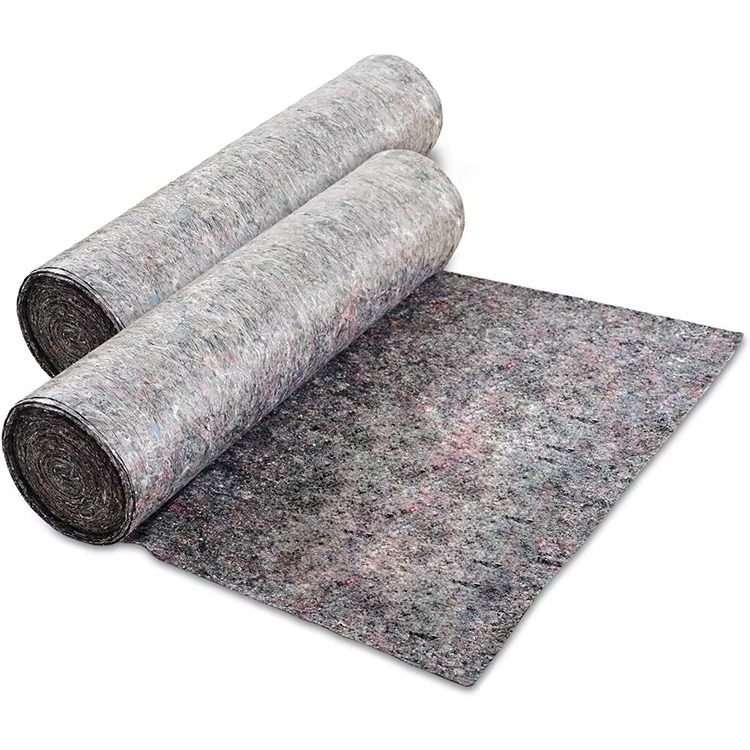
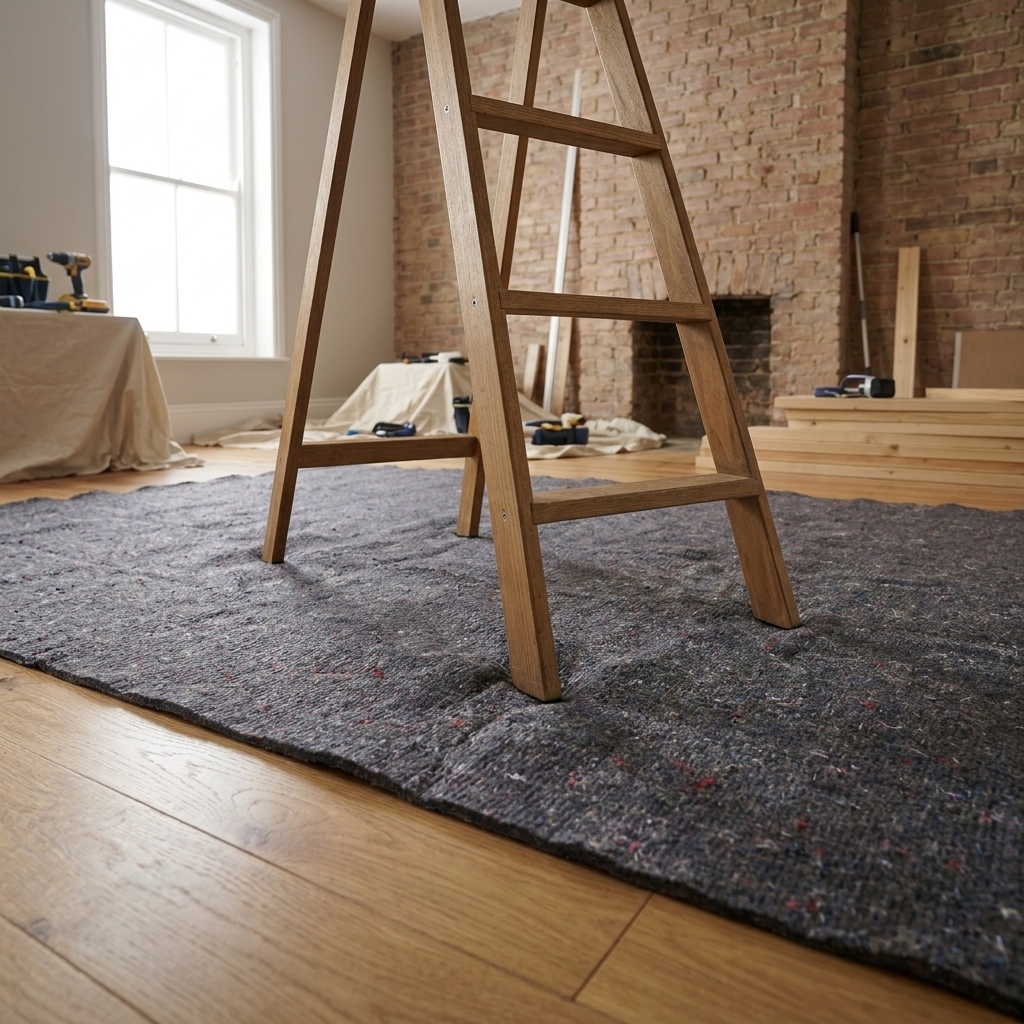
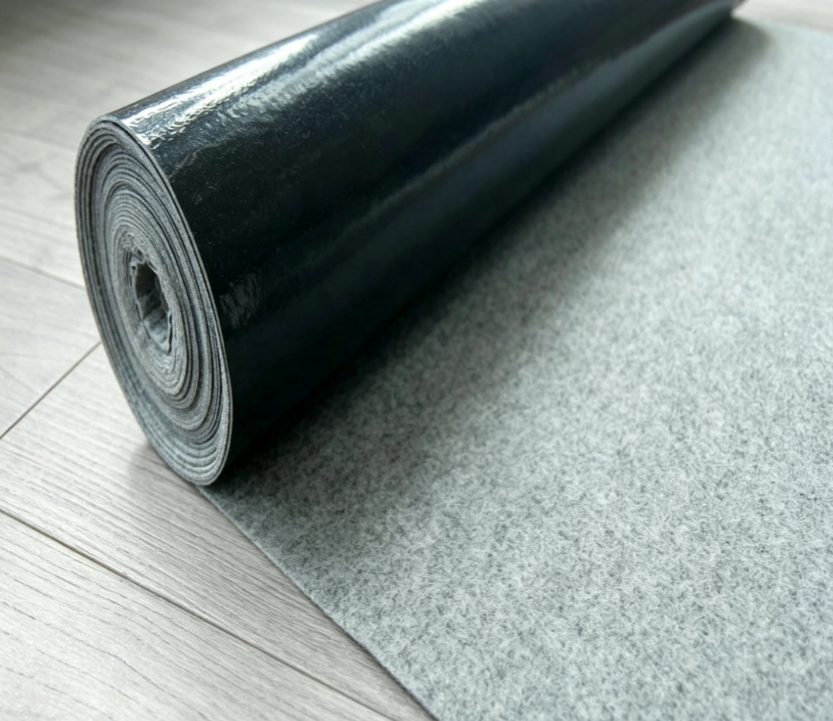
For floor and paint protection, the material must prevent liquids from reaching the surface beneath it. A hydrophobic PE lamination with an absorbent felt core handles both spill containment and slip resistance. Consider a PE-coated spill-proof painting fleece, which combines a self-adhesive backing with a water-resistant film to keep paint and cleaning liquids off the floor.
 PE-Coated Spill-Proof Painting Fleece for Floor ProtectionThis fleece has a high-density nonwoven base, a PE film barrier, and a self-adhesive anti-slip backing, effectively blocking paint, liquids, and abrasion to keep floors clean and undamaged during renovation tasks.View Product →
- Drainage and separation: choose a hydrophilic or treated nonwoven with high permeability.
- Subgrade anti-seepage: choose a hydrophobic composite with a film layer.
- Concrete curing: choose a hydrophilic fabric that retains moisture evenly.
- Temporary floor and paint protection: choose a hydrophobic PE-coated felt with self-adhesive backing.
Frequently Asked Questions
Q1: What is the contact angle threshold between hydrophobic and hydrophilic?
Hydrophobic surfaces have a static water contact angle greater than 90 degrees. Hydrophilic surfaces have an angle less than 90 degrees. Surfaces with an angle above 150 degrees are called super-hydrophobic.
Q2: Can a nonwoven fabric be both hydrophobic and hydrophilic?
Yes, in a composite structure. One side can be a hydrophobic film while the other is a hydrophilic nonwoven. For example, a PE-coated protective mat may have a water-resistant top layer and an absorbent felt base.
Q3: Why does water bead on some geotextiles but not on others?
The surface chemistry and surface roughness determine contact angle. Polypropylene and PE coatings create high contact angles, so water beads. Needle-punched polyester or treatments that add polar groups lower the contact angle, so water spreads.
Q4: Which material is better for drainage, hydrophobic or hydrophilic?
For flow-through drainage, the fabric must allow water to wet and pass, so hydrophilic or water-compatible surfaces are usually better. Hydrophobic surfaces are better for separation and blocking, not for allowing water to flow through.
Final Decision
Hydrophobic and hydrophilic are not just chemistry terms – they are practical specifications. Start with your water problem: side it into the ground, keep it off a building, or hold it against concrete. Then examine the contact angle behavior, GSM, lamination, and adhesive backing.
If the fabric you need is not obvious from these criteria, ask an experienced manufacturer. At Changshu Hui Le Nonwovens Products, our team can guide you through the material selection and help you match a product to your application. You can contact us with your requirements, or read our PE-laminated paint mats news to see how we approach coated nonwoven solutions.
Contact Us
Your email address will not be published. Required field are marked*
Categories
- Company News(3)
- Industry News(15)

Contact Us
1337540116@qq.com