 en
en Français
 Español

Contact Us
Need Help? Email Us Now
1337540116@qq.com
-
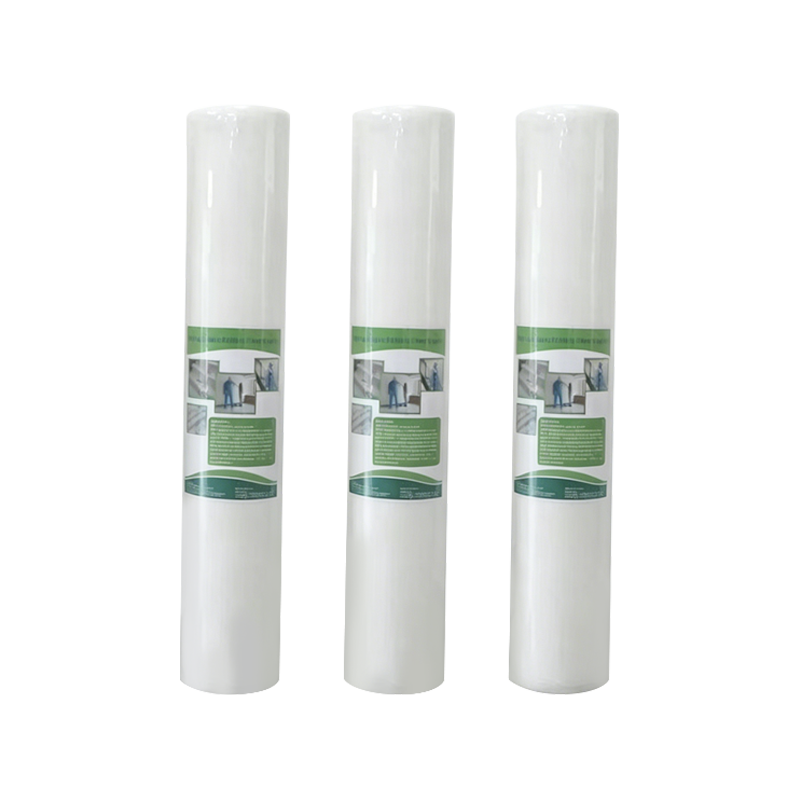


White Self Adhesive Paint Fleece for Floor Protection
-
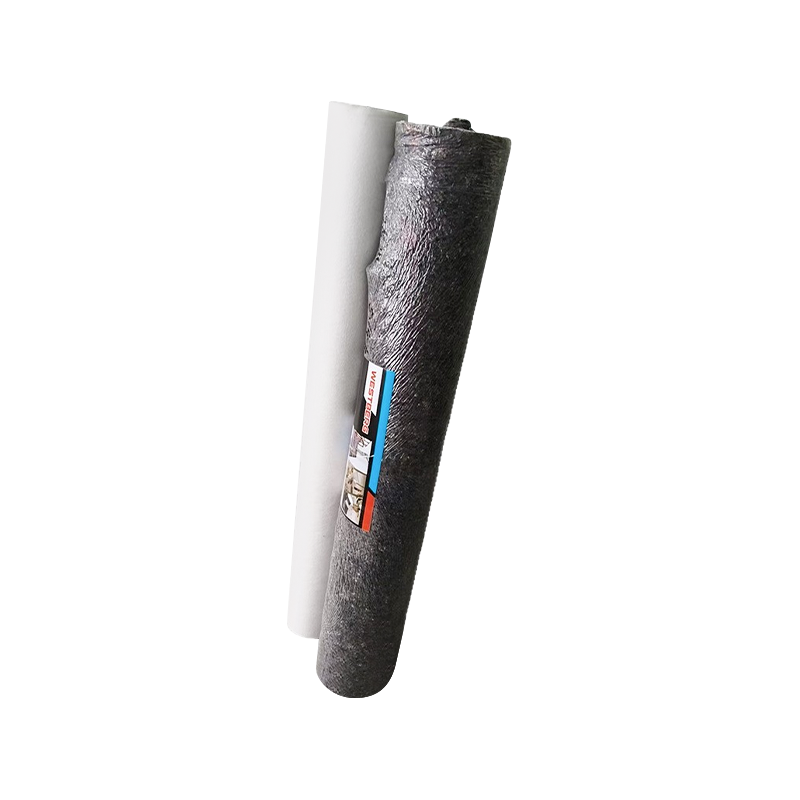
Anti Slip Sticky Paint Fleece with Waterproof Liquid Barrier Film
-
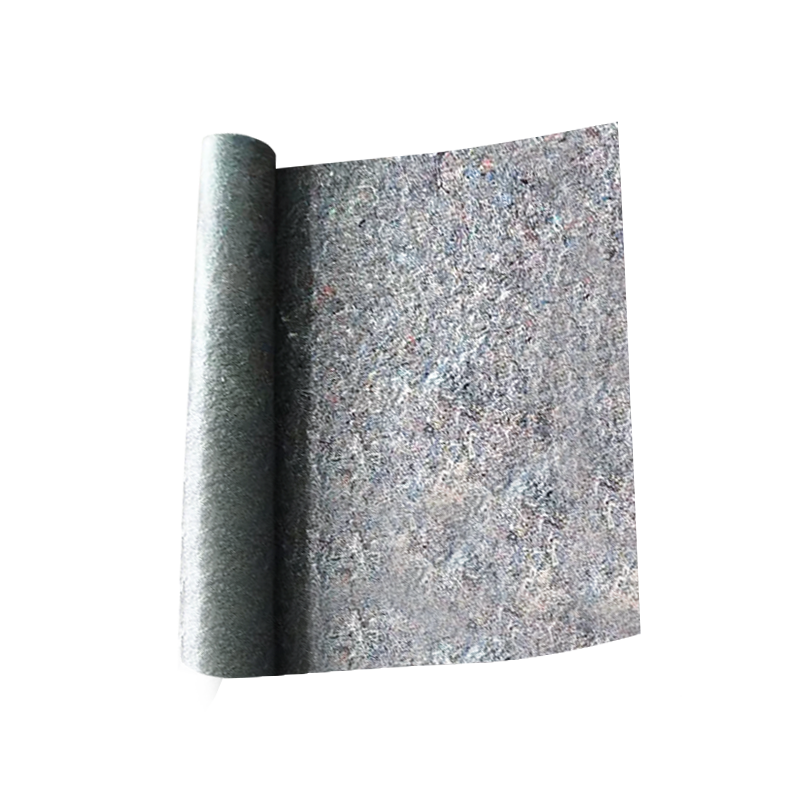
Heavy Duty Self Adhesive Felt Paint Pad for Floor Protection
-
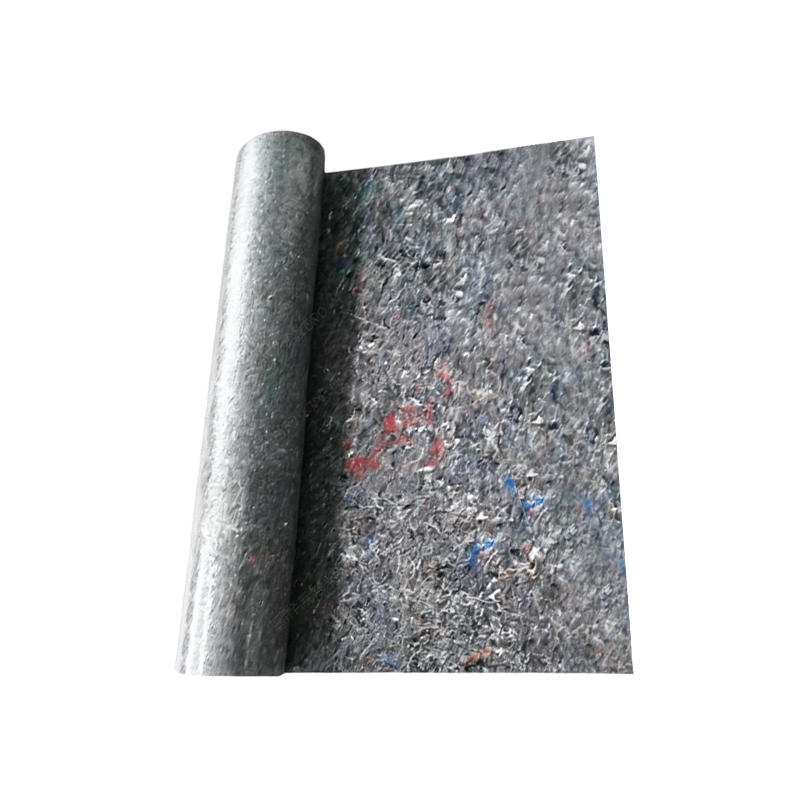
Washable Self Adhesive Renovation Felt Pad for Floor Protection
-
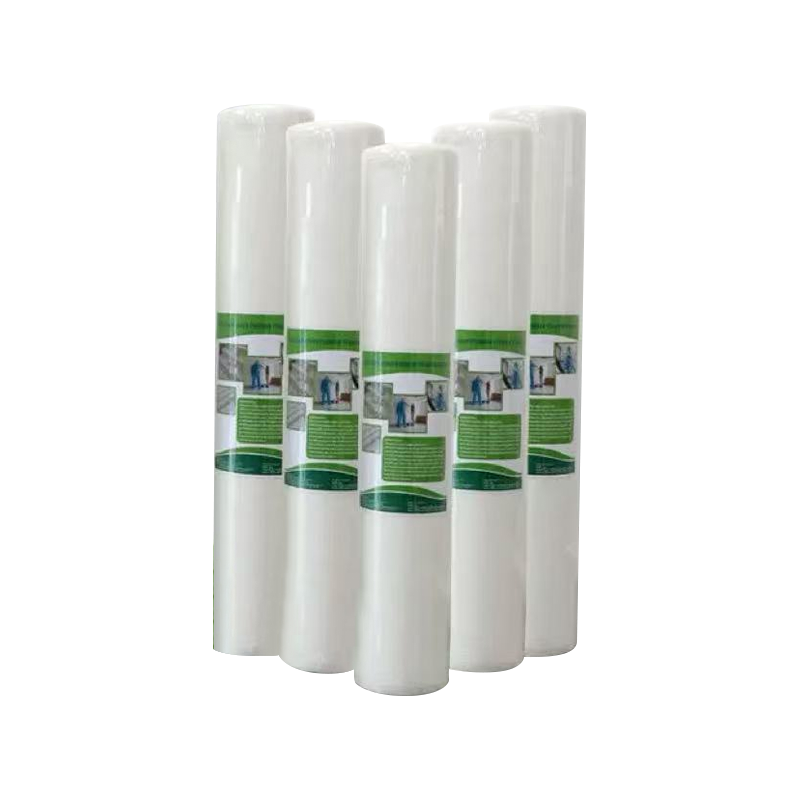
120 to 180gsm White Non Woven Protection Fleece for Temporary Flooring
-
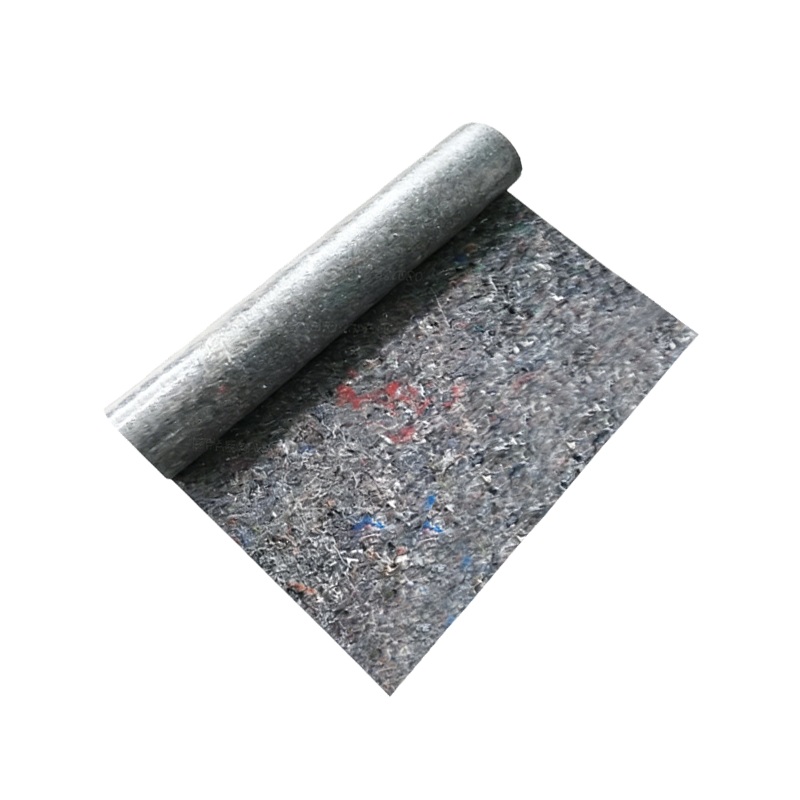
Durable Wear Resistant Self Adhesive Felt Pad for Construction Site
-
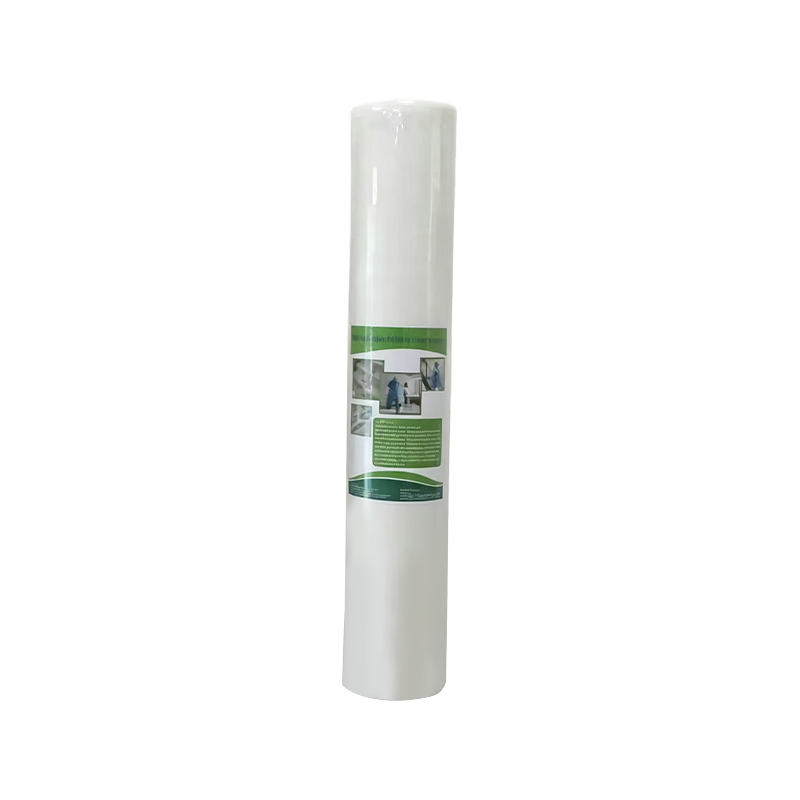
Premium Anti Scratch Self Adhesive Felt Painting Mat for Villa Renovation
-
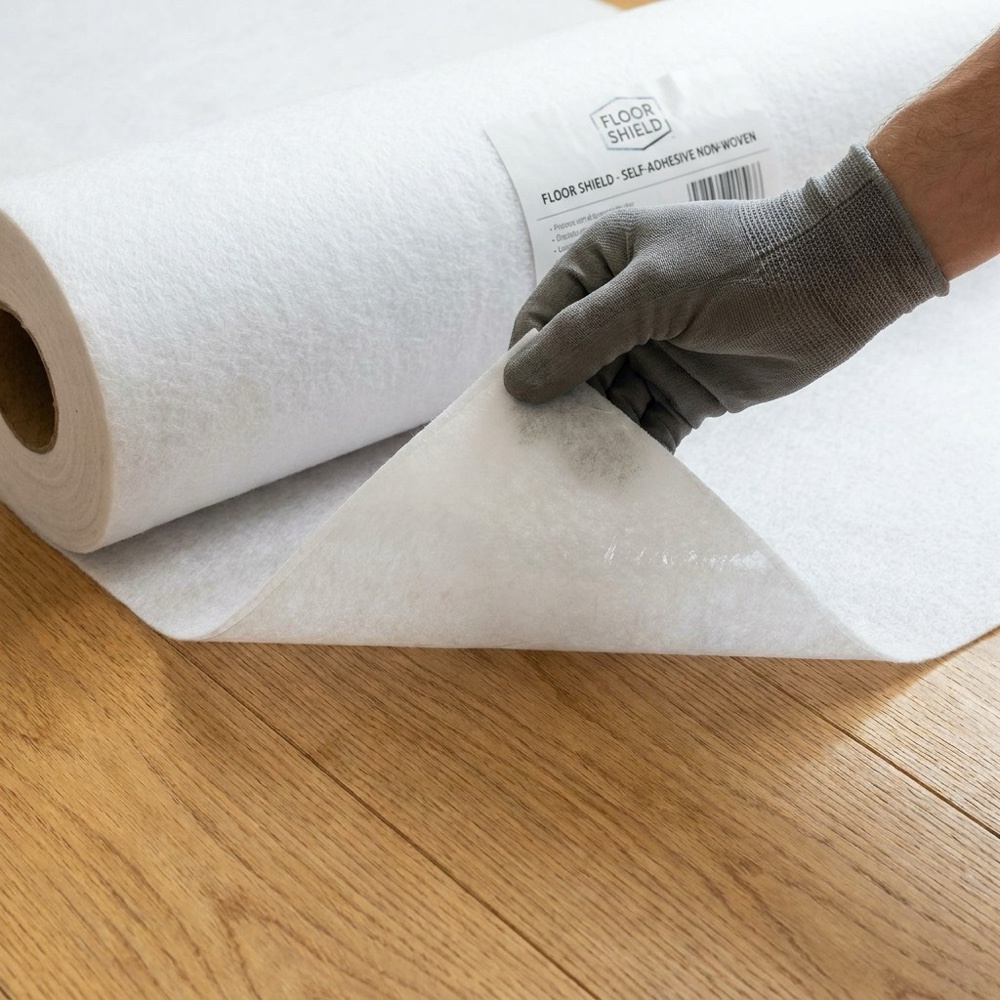
Self Adhesive Floor Protection Fleece Waterproof Tear Resistant Roll
-
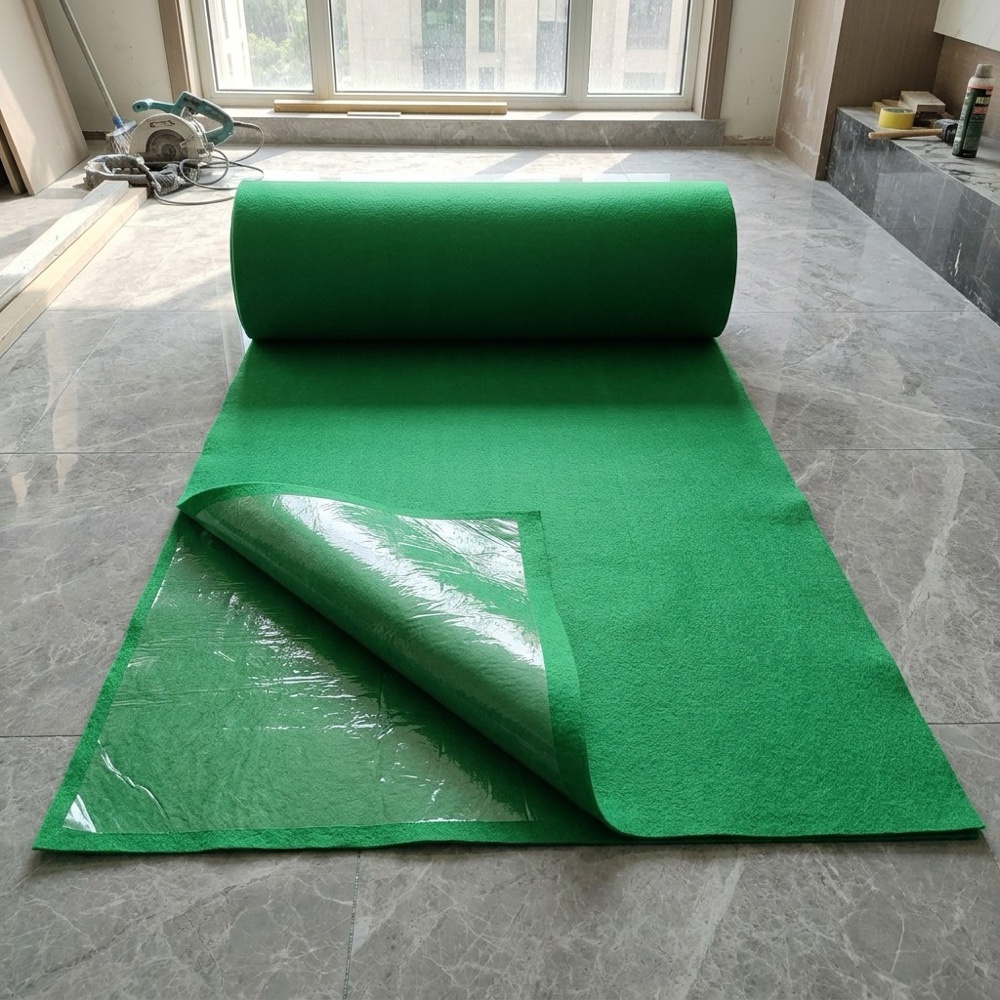
160gsm Self Adhesive Floor Protection Felt Roll for Construction
-
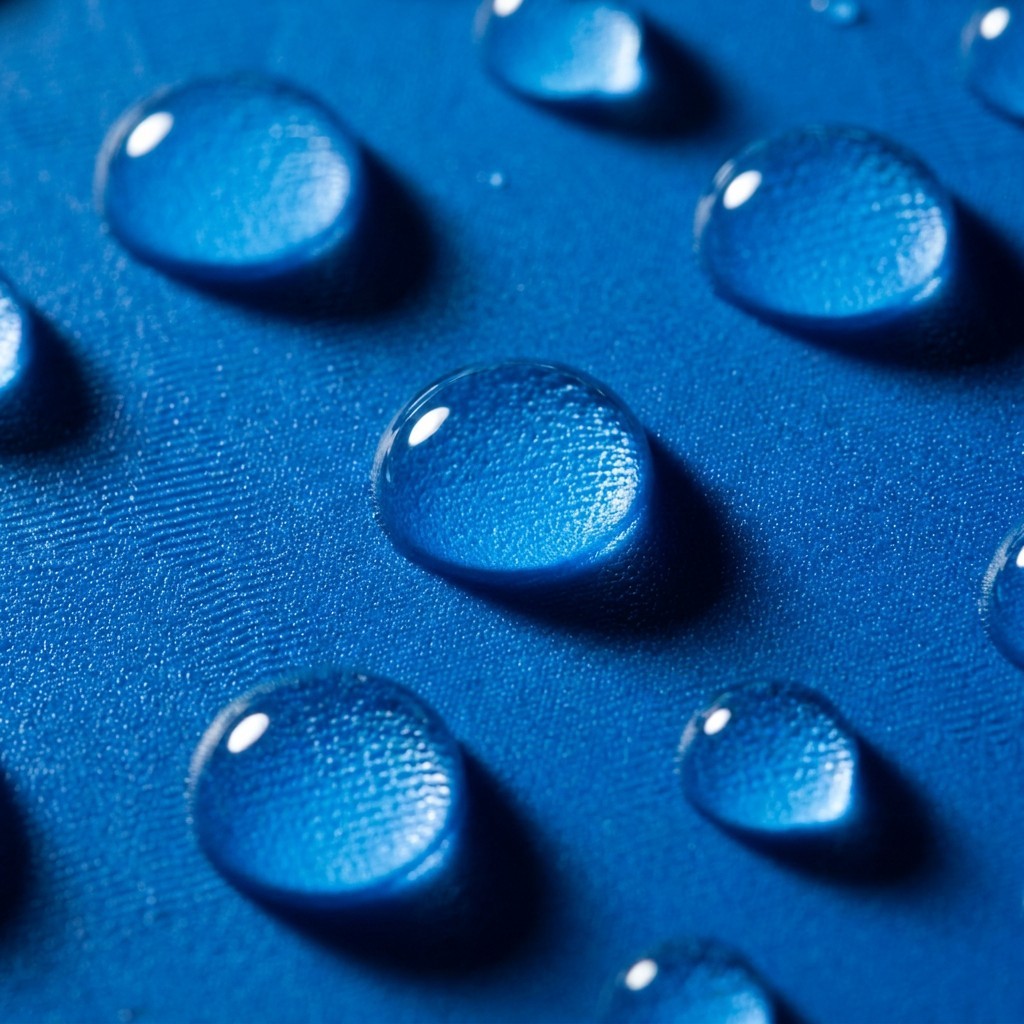
Breathable Self Adhesive Floor Protection Felt Floor Covering Felt
-
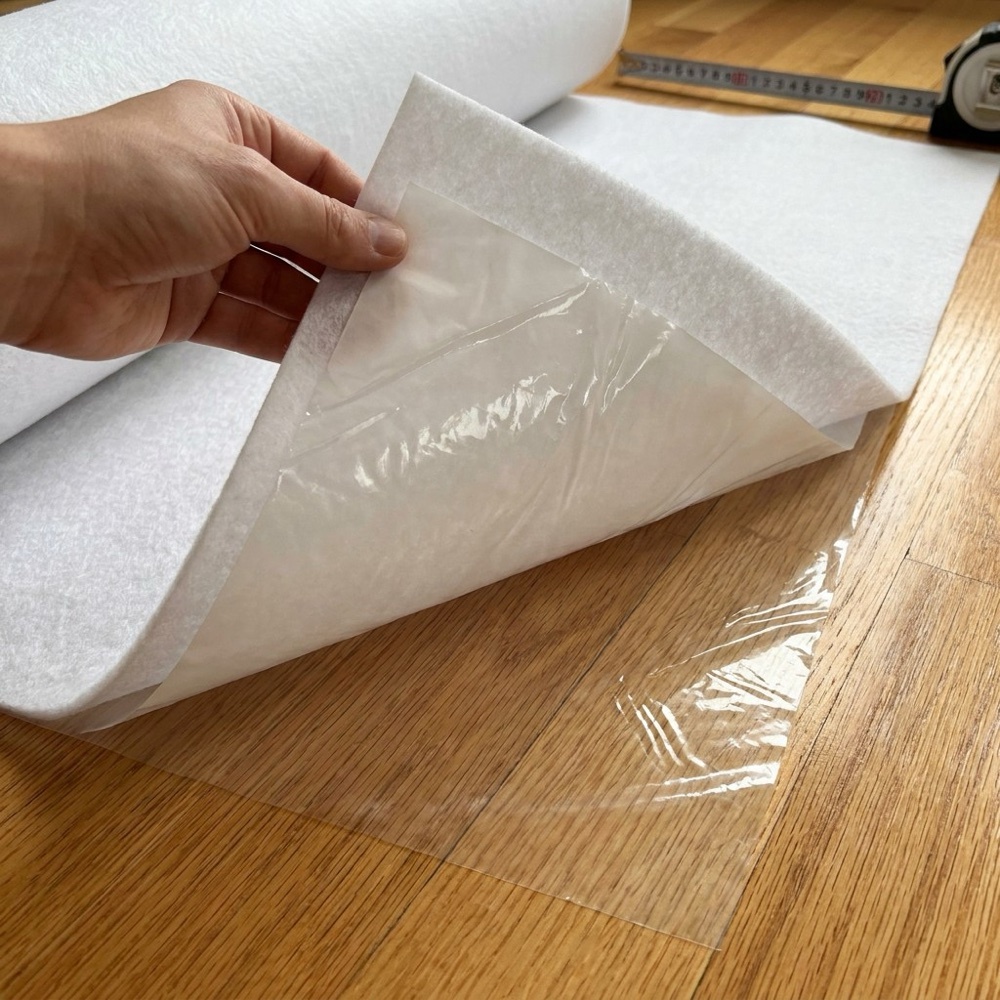
180gsm Heavy Duty Self Adhesive Floor Protection Fleece Roll
-
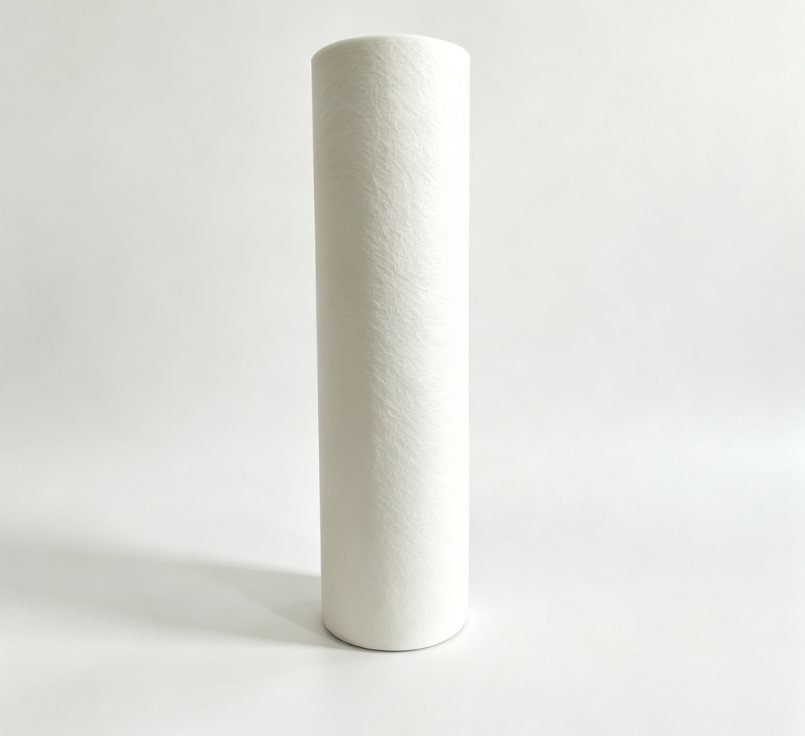
Self Adhesive Protective Floor Cover Fleece Drop Cloth for Construction & Renovation
Self-adhesive floor protection film is a high-performance protective material designed for construction, renovation, moving, and temporary protection scenarios. Featuring a premium polyethylene (PE) substrate combined with an eco-friendly pressure-sensitive adhesive, it offers excellent self-adhesion and removability. It adheres securely to various flooring surfaces—such as marble, wood, tile, and laminate—effectively preventing scratches, abrasion, paint spills, and dust accumulation. By significantly reducing the risk of floor damage during construction, home renovations, exhibition setups, and furniture moving, it enhances site cleanliness and operational safety. The film is wear-resistant, waterproof, slip-resistant, and tear-resistant; it is also easy to use, allowing for rapid application and removal without the need for extra tools, and leaves no adhesive residue or surface damage. It is suitable for a wide range of environments, including residential renovations, commercial spaces, hotel projects, and construction sites.
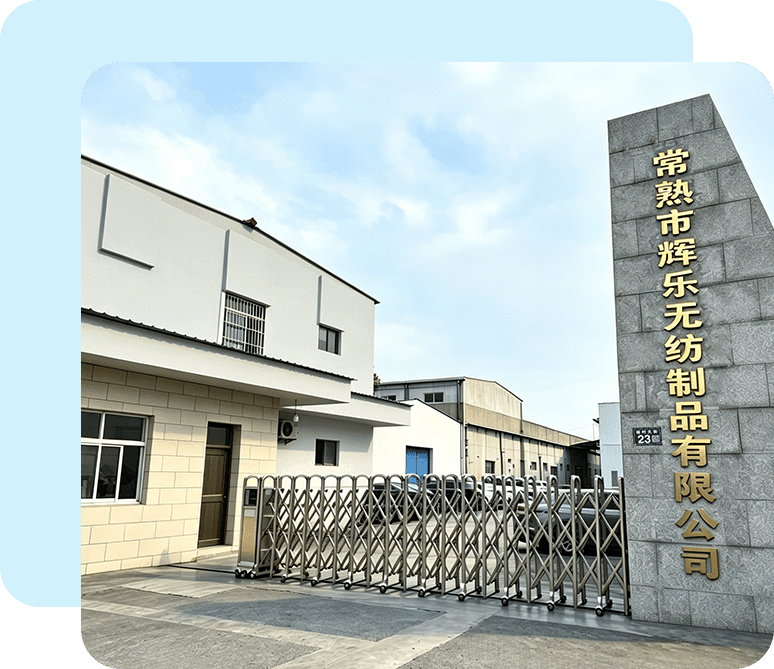
Changshu Hui Le Nonwovens Products Co., Ltd.
Changshu Hui Le Nonwovens Products Co., Ltd is reliable China self adhesive floor protection film Manufacturer and temporary self adhesive carpet protection film factory. We are located in Zhitang Town of Changshu City, a place reputed as "China’s Famous Town for Nonwoven Equipment" and "Hometown of Textiles". It is a powerful manufacturer specializing in the production of needle-punched nonwovens, geotextiles, film-coated nonwovens, PE woven fabric composite felts, nonwoven bags, color film woven bags and other products.
The enterprise boasts a modern standard factory building covering over 3,000 square meters, together with supporting office and living areas, professional teams for R&D, production and quality inspection, as well as a sophisticated management system. It is equipped with relatively advanced automatic production lines and professional testing equipment among its peers. Its products are widely applied in construction and road-bridge engineering, interior decoration, large-scale exhibitions, supermarket shopping, product packaging and other sectors.
Main Production & Sales Scope: Manufacturing, processing and sales of nonwoven fabrics, threads, yarns and knitted textiles, as well as auto parts; sales of textile raw materials, chemical fiber raw materials and garment accessories, plus spray-bonded cotton. Our products sell well nationwide. Adhering to the business philosophy of "Customer-oriented Service, Forging Ahead", we uphold the principle of prioritizing customer service to provide all-round support for clients. Friends from all walks of life are warmly welcomed to visit us for guidance and business negotiations.
We take "Survive by Quality, Develop by Reputation" as our core tenet, and meeting customers’ demands is the working goal of all our staff. We sincerely seek cooperation with all sectors of society to jointly create a promising future.
Our first-class production and testing equipment, premium-quality products and thoughtful services have won recognition from numerous construction enterprises and project owners.
With increased and accelerated national investment in the construction of highways, railways, water conservancy, power and environmental protection projects, we will redouble our efforts to continuously upgrade our products and pursue technological innovation, rewarding all sectors of society with even more outstanding achievements.
Certificate Of Honour
News and Information
Working together to create a better future
Contact Us
Self-adhesive Floor Protection Film Industry knowledge
Self-adhesive Floor Protection Film:
Self-adhesive floor protection film is a temporary surface protection solution engineered for construction, renovation, and industrial maintenance projects. It combines a polyethylene (PE) substrate with a pressure-sensitive adhesive to shield finished floors from paint spills, scratches, debris, and heavy foot traffic. Procurement teams evaluating this category must distinguish between three distinct sub-types, each optimized for different risk profiles and job-site conditions.
As a Self-adhesive Floor Protection Film manufacturer with in-house needle-punching and laminating lines, Changshu Hui Le Nonwovens Products Co., Ltd supplies the full range from thin PE films to heavy-duty felt composites. The category is not a single product; it is a family where material composition, adhesive technology, and layer structure determine application suitability.
Sub-Category Comparison: When to Shortlist Each Type
The parent category splits into three child categories, each addressing a distinct protection problem. The table below maps the decision logic.
| Sub-Category | Material Structure | Primary Protection | Best Application Fit |
|---|---|---|---|
| Self-adhesive Paint Protection Felts | Non-woven fabric + anti-slip backing + adhesive | Paint/coating absorption, scratch resistance | Painting, spraying, high spill risk areas |
| Renovation Fleece & Felt Mats | High-density non-woven or recycled fiber felt, often with liquid barrier | Impact cushioning, heavy debris, liquid seepage | Heavy construction, moving, long-duration projects |
| PE Laminated Paint Mats (adjacent category) | PE film laminated to absorbent felt | Complete liquid barrier with absorption | Industrial painting, chemical spill containment |
For standard renovation where dust and light scratches are the main concern, a basic PE self-adhesive film is the most cost-effective choice. When the job involves wet paint, solvents, or coatings, shortlist Self-adhesive Paint Protection Felts for their absorbent, non-slip surface. For high-traffic construction sites with dropped tools and heavy equipment, Renovation Fleece & Felt Mats provide the necessary thickness and impact resistance. PE laminated mats sit at the extreme end for guaranteed waterproofing.
Critical Specification Variables for Procurement
Specifying the right product requires defining the operating conditions and performance thresholds. Do not rely on generic descriptions; request the following data points in your RFQ.
- Total weight (gsm): Determines thickness, durability, and cushioning. Typical ranges: 80–120 gsm for light-duty PE film, 120–180 gsm for standard fleece, 200+ gsm for heavy-duty felt.
- Adhesive type and peel strength: Pressure-sensitive acrylic or hot-melt adhesive. Must balance secure bonding with clean, residue-free removal on specified substrates (marble, wood, tile, laminate). Request adhesion values (N/25mm) and residue test reports.
- Liquid barrier properties: For paint felts and renovation fleece, specify hydrostatic head resistance or a pass/fail for water/paint penetration under a defined load and time.
- Slip resistance: Critical for worker safety. Ask for coefficient of friction (COF) values on both dry and wet surfaces, or compliance with standards like DIN 51130.
- Tensile and tear strength: Especially important for rolls that will be walked on and stretched during installation. Report in N/5cm or similar units.
- Roll dimensions and packaging: Width (common: 0.6m, 1.0m, 1.2m), length per roll, core diameter, and whether rolls are individually shrink-wrapped with labels.
A common procurement mistake is selecting by price per square meter without correlating gsm and adhesive performance. A lighter, cheaper film may fail on textured tiles or in high-humidity conditions, leading to costly rework and floor damage claims.
Application Fit and Substrate Compatibility
The adhesive system must be matched to the flooring material. A film that adheres well to smooth ceramic tile may lift on textured stone or fail to bond to low-surface-energy vinyl. Always conduct adhesion and residue tests on actual job-site flooring samples before committing to a bulk order.
- Marble and polished stone: Require low-tack, residue-free adhesive to prevent etching or staining. PE films with acrylic adhesive are typically safe.
- Hardwood and laminate: Sensitive to moisture and plasticizer migration. Specify breathable non-woven felts or films with a moisture barrier.
- Concrete and rough substrates: Need aggressive adhesive and thicker material to conform to surface irregularities. Renovation fleece is preferred.
- Underfloor heating systems: Adhesive must not soften or leave residue at elevated temperatures. Request heat-ageing test data.
Customization, Tooling, and Line Integration
As a factory with in-house needle-punching, laminating, and slitting capabilities, we can tailor products to project-specific requirements. Common customization requests include:
- Custom roll widths and lengths to match standard hallway or room dimensions, reducing on-site cutting waste.
- Printed logos, safety warnings, or directional arrows on the film surface for branded job sites.
- Perforations at set intervals for easy tearing without tools.
- Colored films (e.g., blue, green) for zone identification or to indicate wet areas.
- Adhesive-free edges or zones for easier handling and overlapping.
For large-scale projects, integration with automated laying equipment may require specific roll core dimensions, unwind tension characteristics, and splice-free lengths. Provide your equipment specifications during the RFQ stage.
Quality Assurance and Acceptance Testing
Define pass/fail criteria in the purchase agreement. Recommended in-process and final inspection protocols:
- Adhesion/removal cycle test: Apply to standard reference panels (glass, wood, tile), age for 24 hours at 23°C and 50°C, then peel at 180° angle. Measure peel force and inspect for residue.
- Static and dynamic slip resistance: Test per ASTM D2047 or equivalent.
- Water/paint penetration: Pour a defined volume of water or latex paint onto the material surface, cover with a weight, and inspect the underside after 4 and 24 hours.
- Roll integrity: Check for telescoping, core collapse, and consistent unwind tension across the roll width.
- Dimensional stability: Measure width and length against order specifications; tolerance typically ±1% on width, ±2% on length.
Request a first-article inspection report and retain samples from each production batch for reference. For critical applications, agree on an AQL (Acceptable Quality Limit) sampling plan, e.g., AQL 2.5 for major defects, AQL 4.0 for minor defects.
Installation, Maintenance, and Removal Best Practices
Proper installation directly affects protection performance and removal ease. Include these instructions in site training:
- Clean and dry the floor thoroughly before application. Dust, oil, or moisture will compromise adhesion.
- Start from one corner and unroll the film slowly, pressing down with a hand roller or clean cloth to eliminate air bubbles.
- Overlap seams by at least 5 cm to prevent debris ingress. For liquid-prone areas, tape the seams with a compatible adhesive tape.
- Remove within the manufacturer's stated clean-removal window (typically 30–60 days). Prolonged exposure to UV or heat can increase adhesive residue risk.
- Peel slowly at a low angle. If residue occurs, use a mild adhesive remover compatible with the floor finish.
Supplier Evaluation Criteria
When qualifying a Self-adhesive Floor Protection Film supplier, look beyond the product sample. Assess:
- Vertical integration: In-house non-woven fabric production and adhesive coating ensure consistent quality and faster lead times. Our factory in Changshu operates needle-punching lines and lamination equipment under one roof.
- Testing capability: The supplier should have tensile testers, adhesion testers, and environmental chambers for accelerated ageing tests.
- Export experience: Familiarity with international logistics, moisture-proof packaging for sea freight, and documentation for customs clearance.
- Minimum order quantity (MOQ) flexibility: For trial orders or small projects, confirm if the factory accepts mixed container loads or smaller roll quantities.
- After-sales support: Clear process for handling adhesion failures, residue complaints, or dimensional non-conformities, including replacement and root-cause analysis.
Buyer RFQ Checklist
Use this table to structure your request for quotation. Include all relevant fields to receive comparable proposals.
| RFQ Item | Specification to Provide | Why It Matters |
|---|---|---|
| Product type | PE film, paint felt, or renovation fleece | Defines material structure and performance baseline |
| Total weight (gsm) | e.g., 100 gsm, 150 gsm | Directly correlates to durability and cushioning |
| Adhesive type | Acrylic, hot-melt, or custom | Determines residue risk and substrate compatibility |
| Roll width and length | e.g., 1.0m x 50m | Affects coverage rate and installation efficiency |
| Core diameter | e.g., 76mm (3 inch) | Must match dispensing equipment if used |
| Target substrates | Marble, wood, tile, etc. | Supplier can recommend adhesive and backing |
| Liquid barrier required? | Yes/No, with test standard | Critical for painting and wet trades |
| Slip resistance target | COF value or standard | Worker safety and liability |
| Custom printing | Logo, text, color | Branding or safety communication |
| Order quantity | Total square meters or rolls | Impacts pricing and production scheduling |
| Packaging requirements | Shrink wrap, palletization, labels | Protection during transit and storage |
| Delivery terms | FOB, CIF, DDP | Defines cost and risk transfer point |
| Lead time | Days from order confirmation | Project scheduling dependency |
Total Cost of Ownership Considerations
The purchase price per roll is only one component. Factor in:
- Coverage efficiency: Wider rolls reduce seams and labor time. A 1.2m roll may cost more per m² but can cut installation hours by 20% compared to 0.6m rolls.
- Removal and cleanup costs: Residue-free films eliminate the need for solvent cleaning and potential floor refinishing. A film that leaves adhesive residue can incur costs far exceeding the film price.
- Reusability: Some heavy-duty felts can be reused across multiple job phases if kept clean. Specify this in the RFQ if it aligns with your sustainability goals.
- Freight and warehousing: Roll weight and volume affect shipping class. Lightweight PE films maximize square meters per container, while dense felts may cube out before hitting weight limits.
Frequently Asked Questions
What is the typical clean-removal period for self-adhesive floor protection film?
Most acrylic-based films allow clean removal within 30 to 60 days after application, depending on substrate and environmental conditions. Extended exposure to direct sunlight or high temperatures can shorten this window. Always request the manufacturer's rated clean-removal duration and test on your specific flooring.
Can self-adhesive floor protection film be used on heated floors?
Yes, but the adhesive must be formulated to withstand elevated temperatures without softening or leaving residue. Specify the maximum floor surface temperature in your RFQ and request heat-ageing adhesion data from the supplier.
How do I choose between a PE film and a non-woven felt for a painting project?
PE film provides a waterproof barrier but can be slippery when wet and does not absorb paint spills. Non-woven paint felts absorb liquids, reduce slip risk, and prevent paint from being tracked to other areas. For painting, shortlist self-adhesive paint protection felts unless a simple dust barrier is sufficient.
What packaging options are available for export orders?
Standard export packaging includes individual roll shrink-wrapping, palletization with corner protectors, and moisture-barrier wrapping for sea freight. Custom labeling, barcodes, and retail-ready packaging can be arranged. Confirm packaging specifications in the RFQ to avoid transit damage.
Can the film be customized with our company logo?
Yes, custom printing is available. Provide your artwork and specify the print repeat length and color requirements. A printing plate or cylinder fee may apply, and minimum order quantities will be higher for custom-printed rolls.
What is the minimum order quantity (MOQ) for a trial order?
MOQ varies by product type and customization. Standard stock items may have lower MOQs, while custom widths or adhesives require larger production runs. Contact the factory with your target quantity to discuss feasibility.
Get In Touch
Copyright © Changshu Hui Le Nonwovens Products Co., Ltd.
Custom Self Adhesive Floor Protection Film Roll Manufacturer
