en
 Français
 Español

Biodegradable Nonwoven Fabric: Uses, Materials, and Buying Criteria for Projects
2026-09-17On a construction site, a roll of protective fleece is unrolled, used for a few weeks, and then sent to landfill. In a greenhouse, a crop cover is replaced every season, and the old material ends up as waste. These examples explain why buyers increasingly search for biodegradable nonwoven fabric. The real question is not only whether the material can break down, but whether it will perform properly during its service life, how long it takes to degrade, and how the supplier can prove it. The following guide addresses those practical concerns directly.
What Does "Biodegradable Nonwoven Fabric" Actually Mean?
Nonwoven fabric is produced by bonding fibres mechanically, thermally, or chemically instead of weaving or knitting the yarn. A biodegradable nonwoven fabric uses fibres that microorganisms can convert into water, carbon dioxide, and biomass under suitable conditions. That definition does not apply automatically to every nonwoven. Polypropylene (PP) and polyester (PET) are the most common raw materials in the nonwoven sector, and they remain in landfills for decades or more.
Plant-based fibres such as cotton, jute, hemp, bamboo, and wood pulp, along with regenerated cellulose and biopolymers such as polylactic acid (PLA) and polyhydroxyalkanoates (PHA), provide the basis for genuinely biodegradable options. However, fibre choice alone does not ensure complete decomposition. Additives, coatings, and bonding agents can significantly change how and when the material breaks down.
Which Fibres Can Deliver Real Biodegradability?
Buyers need a quick way to compare options. The table below summarises the main material categories, their typical sources, common applications, and indicative degradation times.
| Fibre Type | Typical Source | Main Applications | Indicative Degradation Time | Performance Notes |
|---|---|---|---|---|
| Plant fibres (cotton, jute, hemp, bamboo) | Renewable crops | Hygiene products, agriculture, bags | 3 to 12 months in soil or compost | Soft, absorbent, fast break-down |
| Regenerated cellulose (viscose, lyocell) | Wood pulp | Wipes, agricultural mulch | 3 to 6 months | Breathable, flexible |
| Biopolymers (PLA, PHA, PBS) | Corn starch, microbial fermentation | Packaging, mulch film, short-term covers | 6 to 12 months in industrial composting | Higher strength, tunable properties |
| Polypropylene (PP) | Petroleum | Geotextiles, shopping bags, protective fleece | Decades to centuries | High strength, water-resistant, low cost |
The comparison makes one point clear: a product can be a perfectly good nonwoven without being biodegradable, while an eco-friendly label may hide a material that still contains significant non-biodegradable components.
Factors That Decide Whether Degradation Really Happens
Biodegradation is not a single event. Three variables determine whether a nonwoven fabric will actually break down as advertised.
- Material composition. Blends, coatings, and lamination can block decomposition. A self-adhesive paint mat with a PE backing layer may degrade in the fibre layer, but the plastic film remains as microplastic.
- Environmental conditions. Industrial composting standards require controlled humidity and a temperature of about 58°C with active microbial communities. Soil burial, marine exposure, and landfill conditions produce very different outcomes.
- Service life and disposal path. A heavy geotextile used for road subgrade stabilisation may stay in place for years under stress and weather. A temporary crop cover is removed and disposed of after one season, which makes biodegradation more realistic.
Key takeaway. The thicker the fabric, the denser the structure, and the more additives it contains, the longer it takes to decompose. Verify the entire material system, not just the fibre type.
Buying Considerations for Real-World Projects
Before selecting a biodegradable nonwoven, ask the supplier three questions.
1. What standards and certifications are provided? Look for EN 13432 in Europe, ASTM D6400 in the United States, ISO 14855 as a laboratory test for biodegradability, and home compostability marks such as TÜV certification. These schemes require laboratory evidence instead of general "eco" language.
2. What is the total cost of ownership? The raw material cost of natural or biopolymer fibres is usually 10 to 40% higher than PP or PET. If the product replaces a single-use plastic cover that would otherwise be sent to landfill, the savings in waste handling can offset part of the difference.
3. Will the material perform for the intended service period? For a temporary building protection mat, three months of duty may be enough. For a permanent drainage geotextile under a highway, a biodegradable option is normally unsuitable. A supplier with hands-on application experience can help balance performance and end-of-life goals. Contact our team to discuss your project conditions and acceptable disposal route.
Where Biodegradable Nonwovens Add Practical Value
Biodegradable nonwovens make the most sense in short-life applications. Three areas stand out in construction and agriculture.
Agriculture and Greenhouse Covers
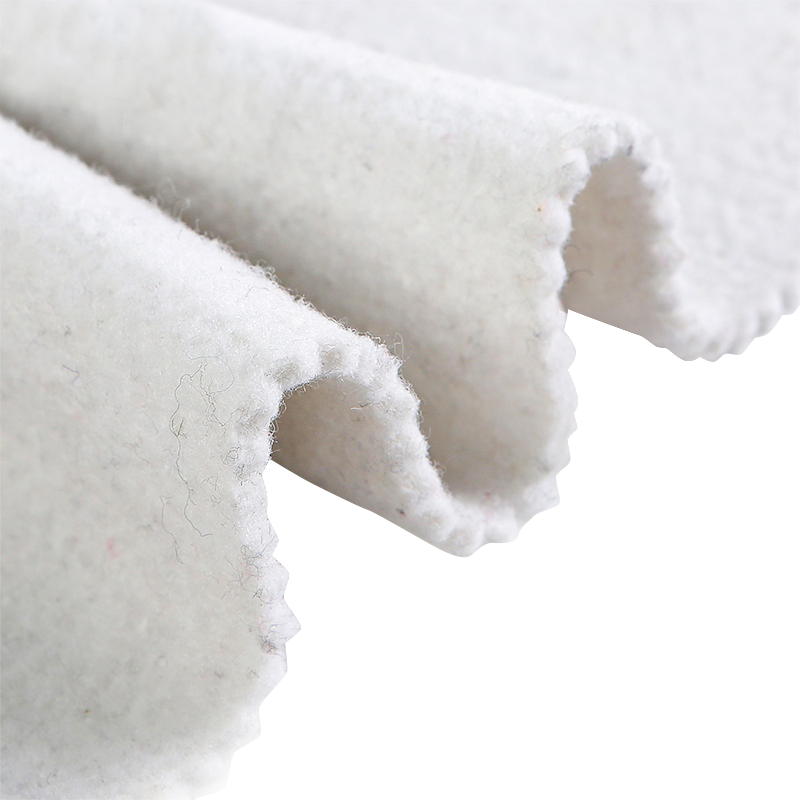
Nonwoven covers are used for frost protection, dust control, and moisture retention. In a greenhouse, this recycled mixed-color insulation felt for greenhouse frost protection is a practical example: the non-woven construction withstands multiple seasons, reducing the volume of single-use plastic in the waste stream. When a crop cycle is short and the material can be composted after harvesting, natural-fibre or PLA-based nonwovens become a genuinely sustainable choice.
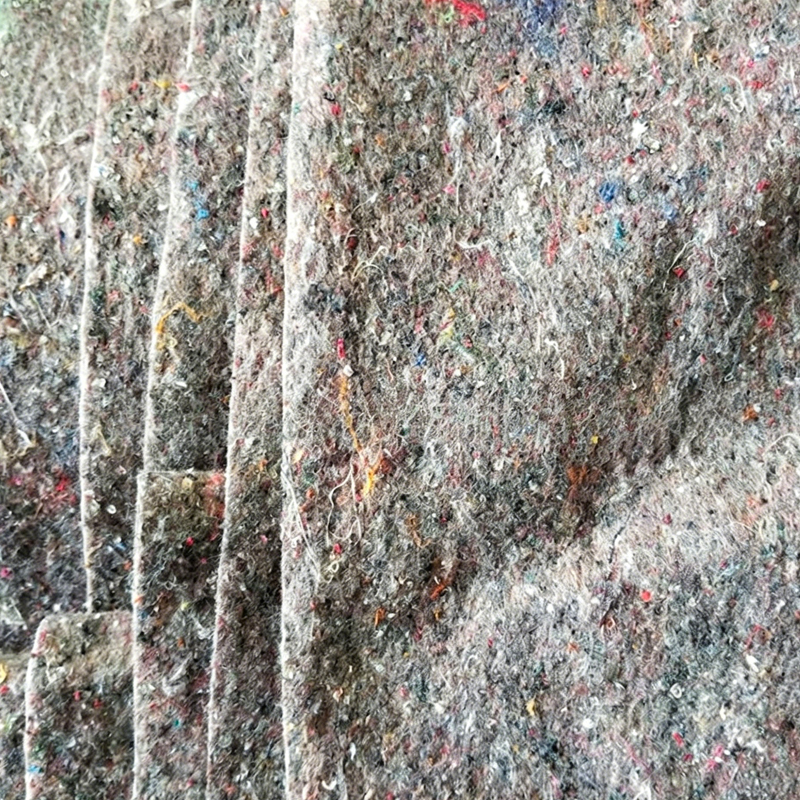 Recycled Polyester Insulation Felt for Greenhouse Frost ProtectionThis needle-punched nonwoven felt made from recycled PET fibers offers thermal insulation and moisture regulation for greenhouses, helping reduce heat loss and maintain a stable growing environment during cold seasons.View Product →
Building Renovation and Temporary Surface Protection
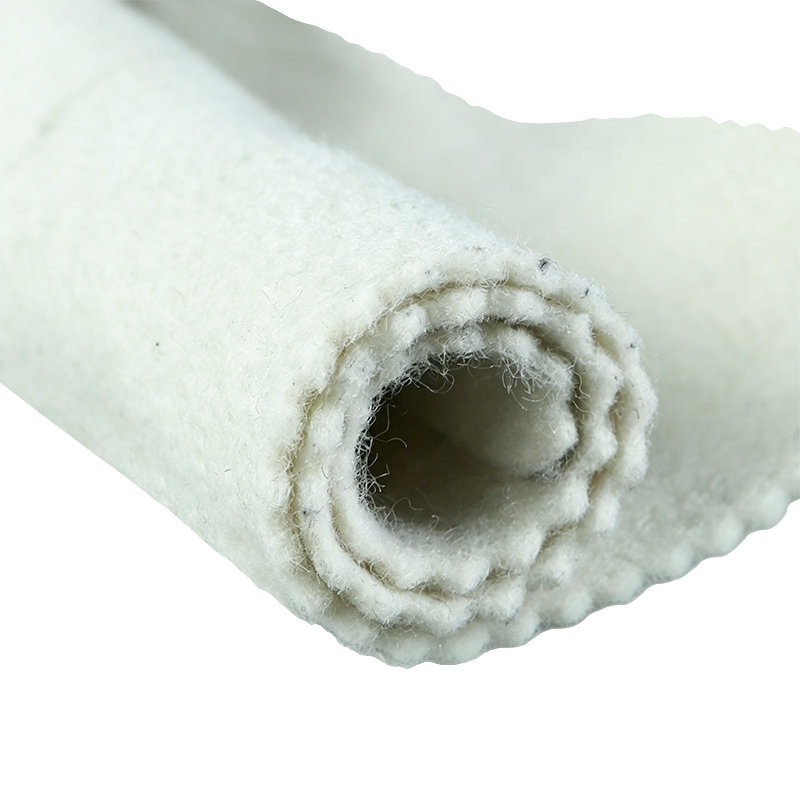
Floor protection mats, paint pads, and self-adhesive fleece are used during renovation and construction, then thrown away. A common starting point for temporary surface protection is this 120 to 180 gsm white non-woven protection fleece. It provides a reliable barrier against scratches and spills. When the application does not require solvent penetration or extreme abrasion, fibre choices can be adjusted toward biodegradable options.
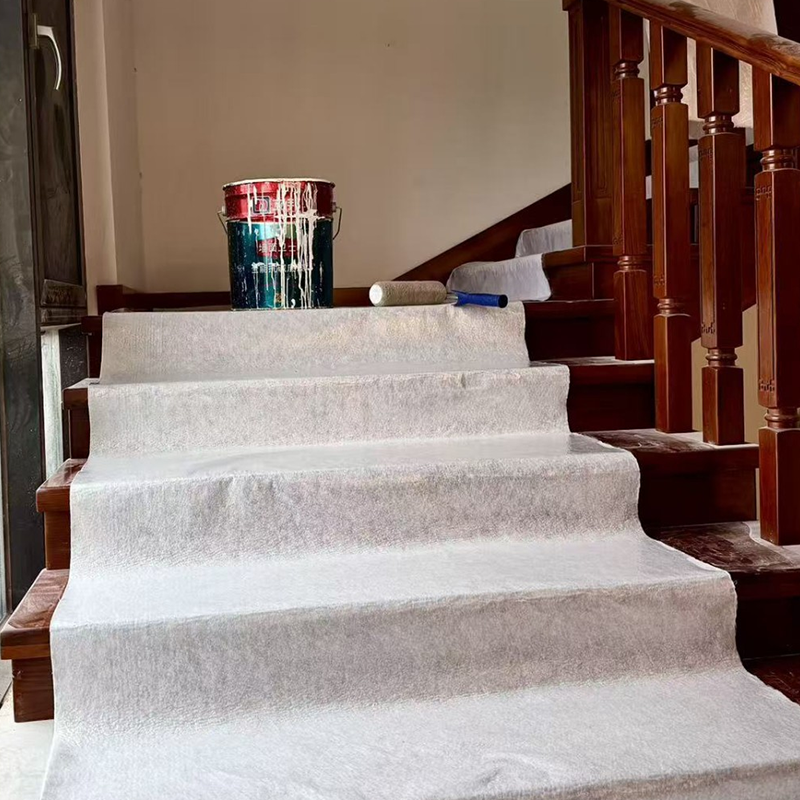 White Nonwoven Protection Fleece for Temporary FlooringThis 120-180 gsm needle-punched polyester fleece with an anti-slip adhesive backing provides reliable temporary protection against scratches, dust, and spills during renovation or construction work.View Product →
Road Works and Temporary Engineering Applications
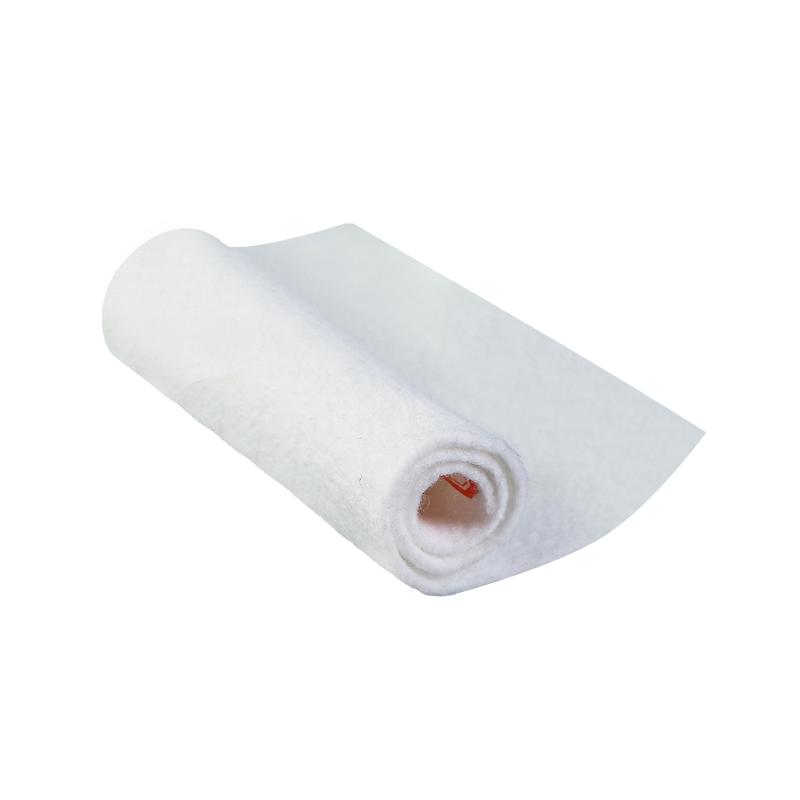
Road maintenance and short-term civil works present a narrower but real opportunity. In asphalt road curing, this ready-to-ship permeable polyester geotextile for asphalt road curing is a proven standard: it helps control moisture and reduce surface defects. If the curing period is short, ask your supplier whether PLA or blended-fibre alternatives meet the same performance requirement. For permanent subgrade stabilisation, engineered PP or PET geotextiles remain the safer choice.
 Permeable Polyester Geotextile for Asphalt CuringThis ready-to-ship needle-punched PET geotextile is used in asphalt pavement curing to regulate moisture and temperature, reduce shrinkage cracking, and improve road surface durability.View Product →
To see how these materials are applied in different field conditions, browse our industry news.
FAQs About Biodegradable Nonwoven Fabric
Q1: Is all nonwoven fabric biodegradable?
No. Most nonwoven fabric on the market is made from polypropylene or polyester. Only material made from plant fibres, regenerated cellulose, biopolymers, or blends of these can be called biodegradable, and only when the formulation supports microbial decomposition.
Q2: How long does biodegradable nonwoven fabric take to break down?
The time frame is highly variable. Under industrial composting conditions at about 58°C, PLA-based material can decompose within 6 to 12 months. In natural soil, the same fabric may take 1 to 3 years. In a landfill, the process is often negligible because oxygen and moisture are limited.
Q3: Which certifications should I look for?
Look for EN 13432 for industrial composting in Europe, ASTM D6400 for industrial composting in the United States, ISO 14855 as a biodegradability test method, and home compostability marks such as TÜV. These certifications require specific laboratory evidence rather than general "eco" wording.
Q4: Can biodegradable nonwovens replace polypropylene geotextiles in road construction?
For temporary works such as short-term curing covers, biodegradable options may be acceptable. For permanent infrastructure such as subgrade stabilisation, the strength, water resistance, and durability of engineered PP or PET geotextiles are usually required.
Conclusion
Choosing a biodegradable nonwoven fabric is not a matter of picking a green label. It is a technical decision that involves material composition, expected service life, disposal environment, certification, and total cost. A manufacturer with hands-on nonwoven experience can clarify those trade-offs and help select a solution that balances performance, cost, and sustainability. When the application matches the material's limits, biodegradable nonwovens become a practical environmental improvement rather than a marketing statement.
Contact Us
Your email address will not be published. Required field are marked*
Categories
- Company News(3)
- Industry News(15)

Contact Us
1337540116@qq.com