en
en Français
 Español
Non Woven Construction: Geotextiles, Insulation & Floor Protection Guide
2026-09-10On most construction sites, the materials that save the most money are the ones that prevent problems before they appear. A subgrade that drains poorly can make a road fail within months. A floor scratched by heavy equipment can add thousands of dollars to a renovation budget. In both cases, the solution is often the same product family: non woven construction fabrics. These needle-punched or thermally bonded sheets are engineered to filter, separate, reinforce and protect. They are not decorative extras; they are functional tools designed to solve specific engineering and site-protection problems. Getting the specification right from the start matters more than any later adjustment.
Non woven construction is no longer a niche product; it is a standard specification in road engineering, building renovation and agricultural insulation.
What Is Non Woven Construction Fabric and How It Works
Nonwoven fabric is a sheet material made from staple or continuous fibers that are bonded together through mechanical, chemical or thermal processes. Unlike woven fabric, where threads cross each other under tension, nonwovens rely on fiber entanglement and bonding to create a stable structure.
In construction, the most common nonwoven technology is needle punching. Barbed needles repeatedly pierce a fiber web, interlocking the fibers to create a fabric with high tensile strength and good permeability. Other processes, such as spunbond, meltblown and spunlace, produce different textures and properties, but all share the same principle: engineered fibers, no weaving required.
Construction-grade nonwovens are typically made from polyester or polypropylene. These polymers resist moisture, rot and most chemicals while remaining flexible enough to conform to irregular surfaces. The result is a material that works as a geotextile for drainage, a protective layer for floors, or an insulation blanket for buildings and greenhouses.
Key Applications in Building and Infrastructure
Non woven construction materials cover a wide range of tasks across civil engineering, building renovation and agriculture. Understanding the main application areas is essential for selecting the right specification.
Road and Concrete Curing
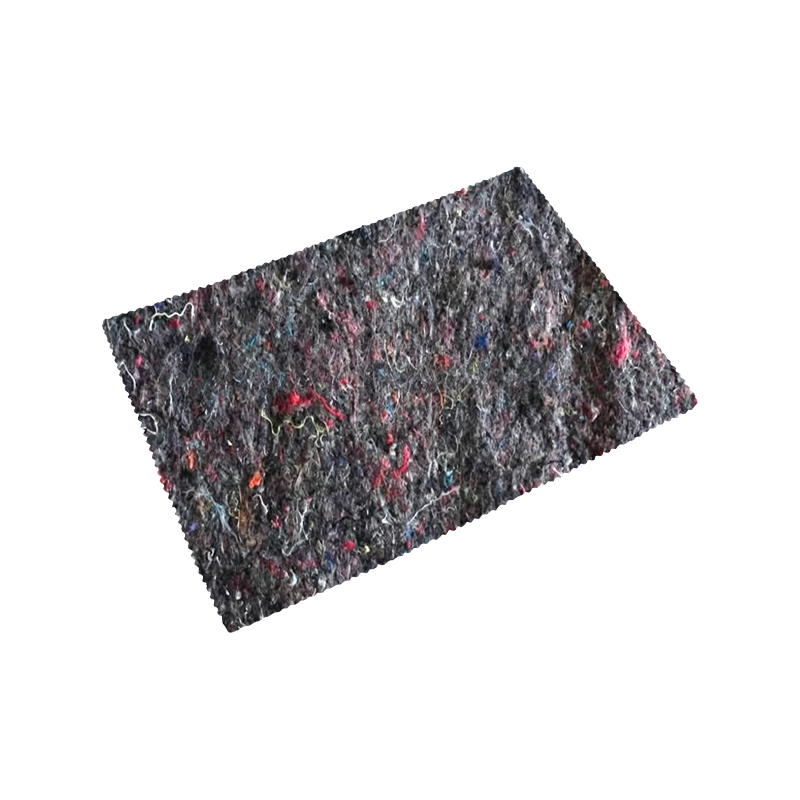
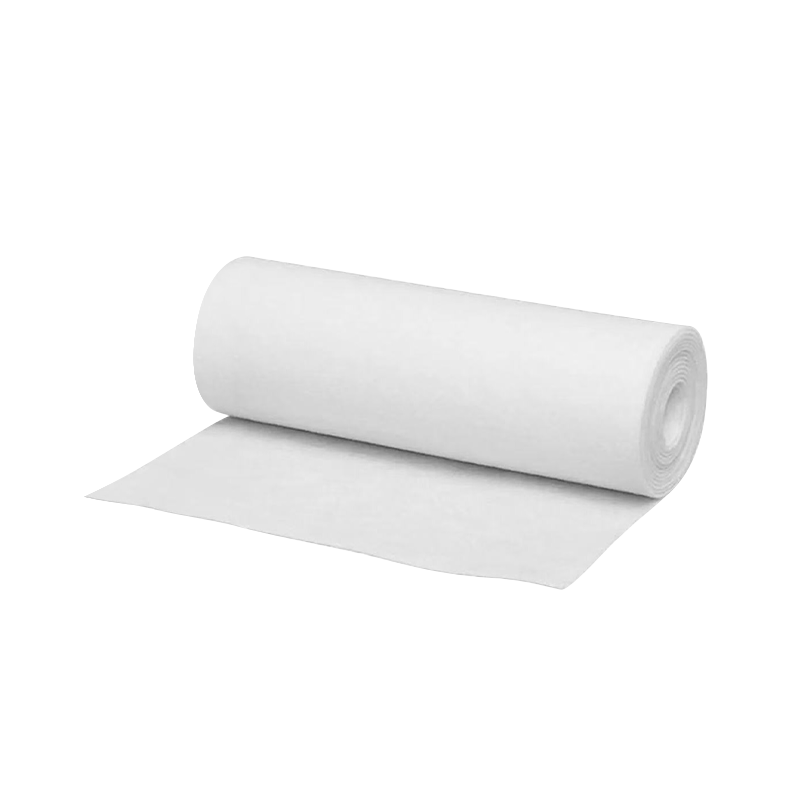
For road construction and concrete maintenance, nonwoven geotextiles are placed under the pavement or on the concrete surface. A 240gsm polyester non-woven geotextile for highway curing helps distribute loads, reduce reflection cracking and retain moisture during the curing process. The fabric's permeability allows water to escape while keeping fine soil particles in place, preventing subgrade clogging. This is especially critical for asphalt overlays where water accumulation is the leading cause of premature failure.
 240gsm Polyester Nonwoven Geotextile for Highway Curing and Concrete Moisture RetentionThis industrial-grade geotextile retains moisture during concrete curing, reducing surface cracks. Its needle-punched polyester structure offers high tensile strength and conforms to uneven subgrades, making it ideal for highway and bridge deck applications.View Product →
Subgrade and Slope Protection
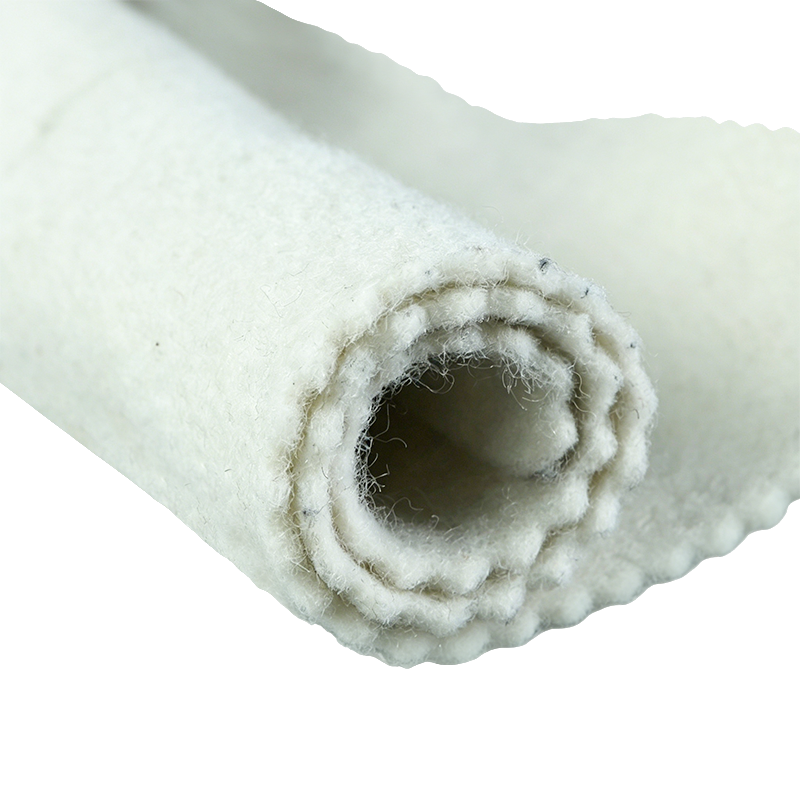
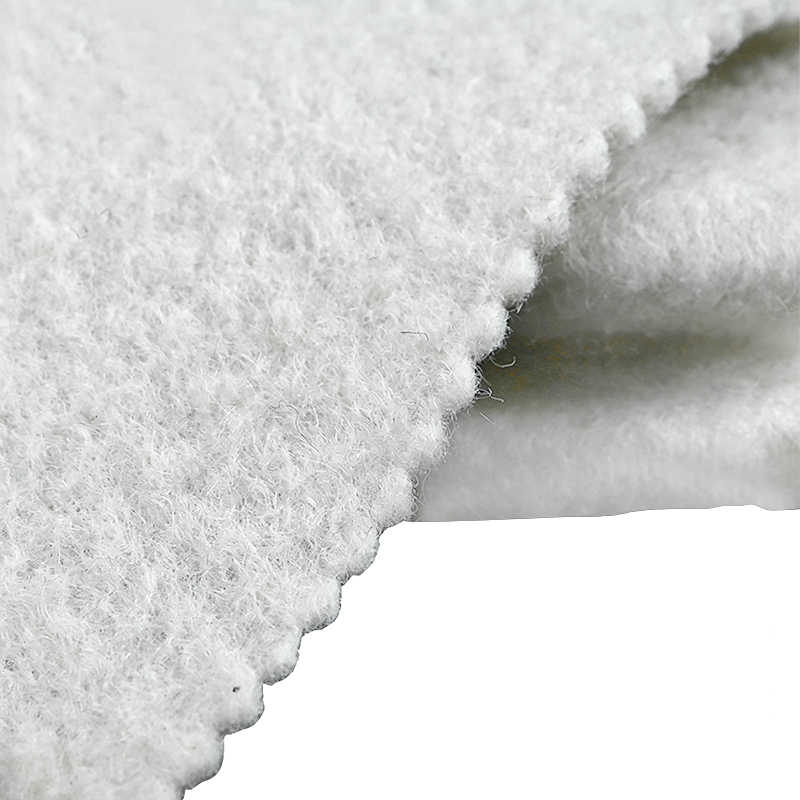
On slopes and soft subgrades, nonwoven geotextiles create a separation layer that prevents soil mixing. A non-woven geotextile for subgrade and slope stabilization is placed between soil and aggregate to improve stability. Because the fabric is made of randomly oriented fibers, it can stretch in multiple directions without tearing, which makes it easier to lay over irregular terrain.
 Nonwoven Geotextile for Subgrade and Slope StabilizationThis needle-punched polyester geotextile enhances soil shear resistance and controls erosion on slopes and soft subgrades. Its multidirectional strength and permeability improve stability and drainage, reducing landslide risks.View Product →
Composite and Film-Coated Geomembranes
For projects that require both drainage and waterproofing, composite geomembranes combine nonwoven geotextile with a plastic film. The nonwoven side protects the film from punctures and aggregates, while the film side blocks water infiltration. These composite products are frequently used in highway subgrade anti-seepage layers. They are also used in road curing where the fabric is used to retain moisture while a laminated film prevents evaporation.
Greenhouse Insulation and Dust Control
Nonwovens also play a role in agricultural and construction dust control. Heavy-duty insulation fleeces protect greenhouse plants during frost, while white nonwoven fabrics are stretched over slopes or exposed soil to control dust and retain moisture. These uses take advantage of the fabric's high vapor permeability and UV resistance.
Renovation and Floor Protection
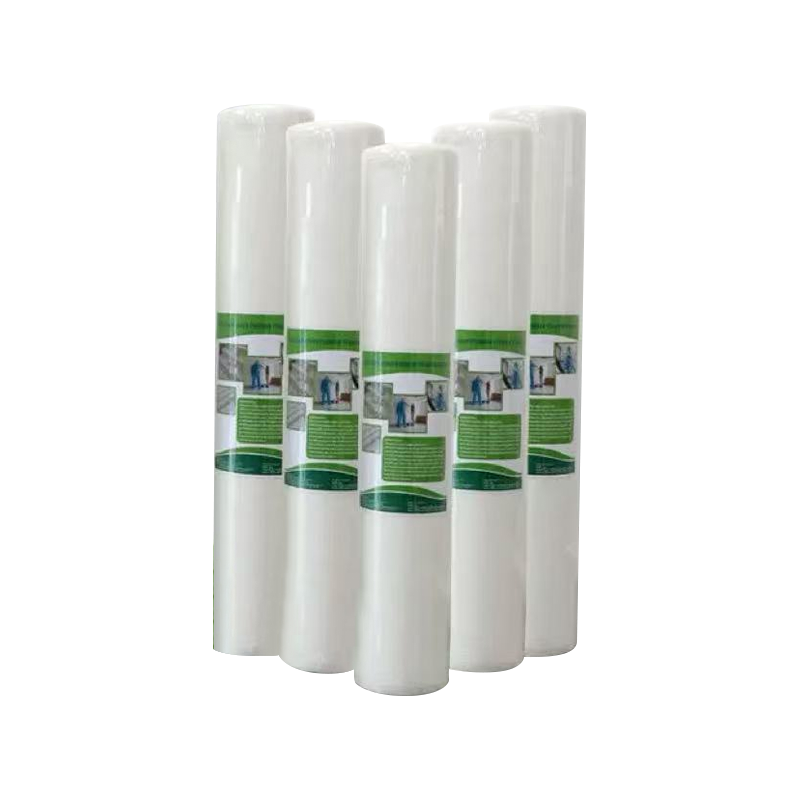
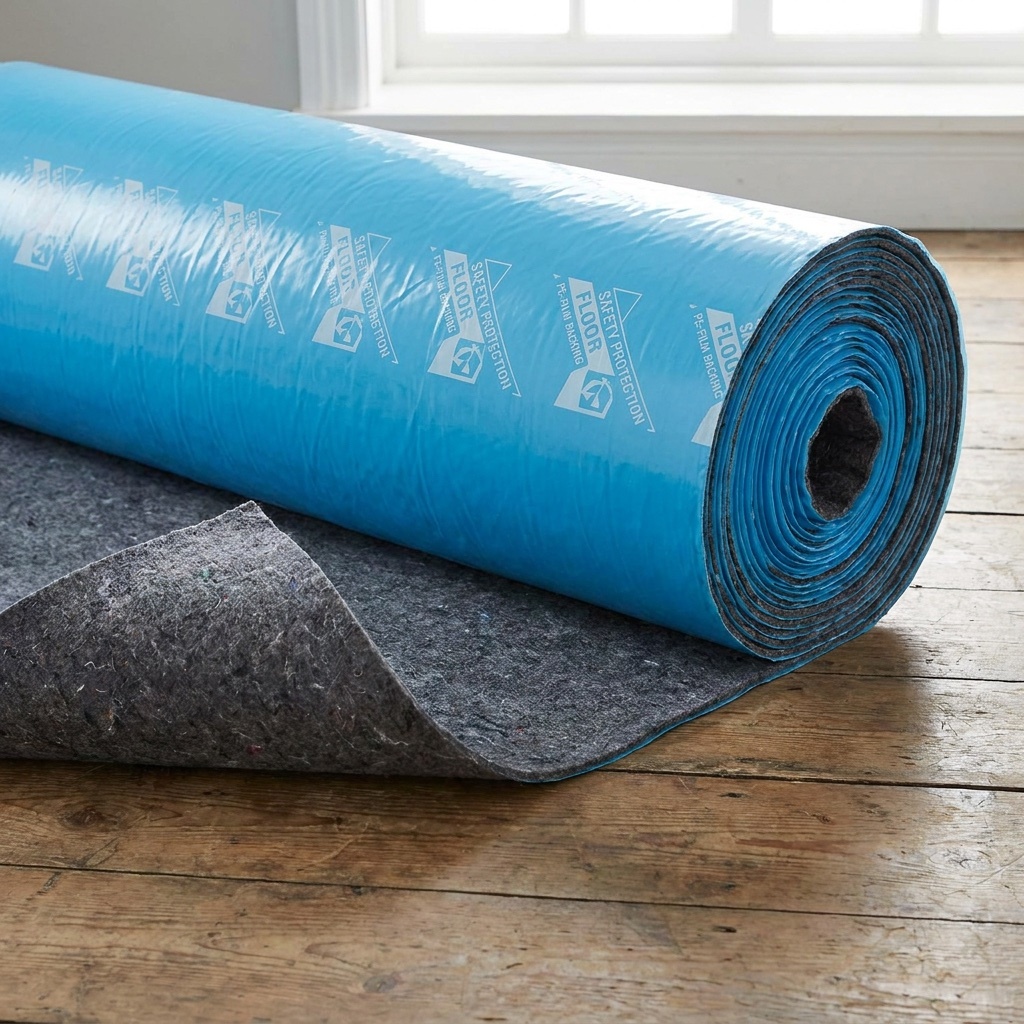
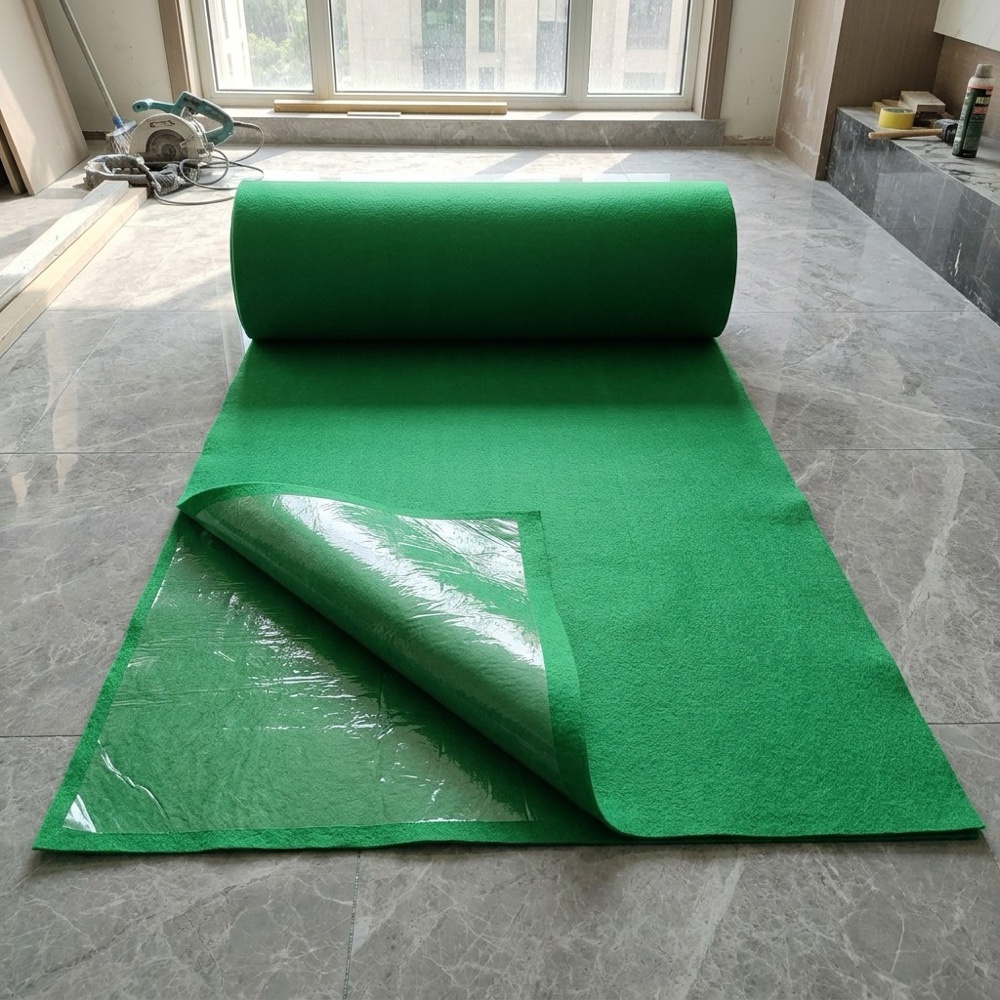
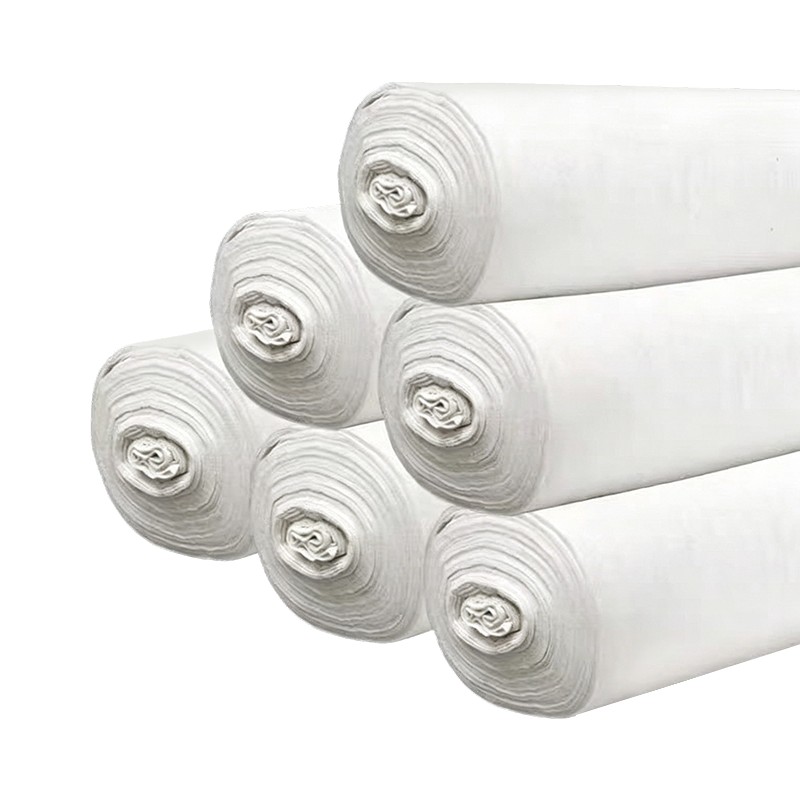
In building renovation, 120 to 180gsm white non-woven protection fleece for temporary floor protection is widely used to prevent scratches, paint splatter and damage from foot traffic. For added protection, self-adhesive backing keeps the mat in place, a feature that is especially useful on polished floors and stairs. The product is available in different grammages depending on the expected load and duration of the project.
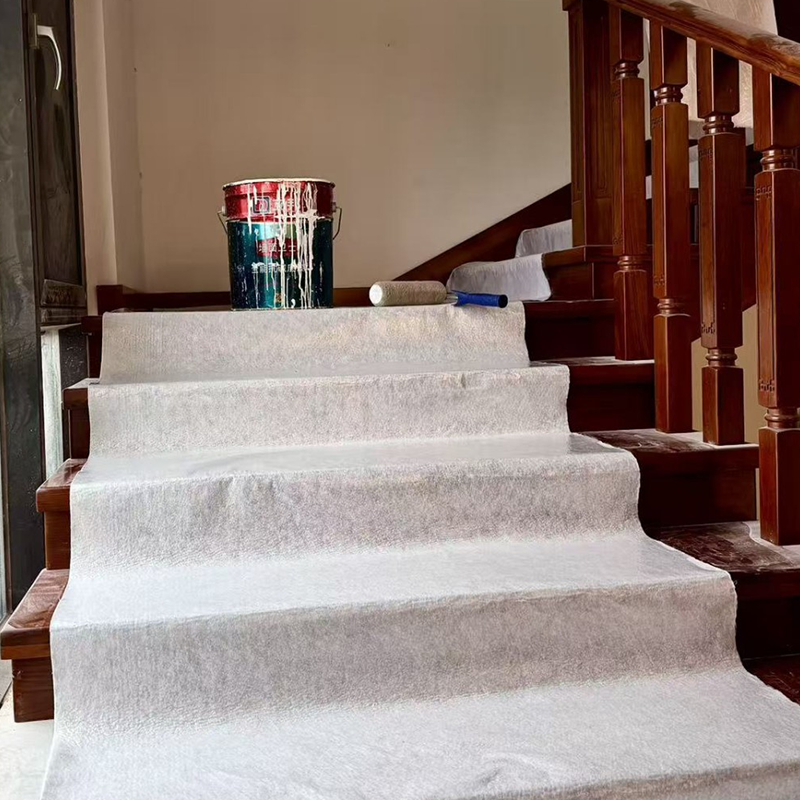 120 to 180gsm White Nonwoven Protection Fleece for Temporary FlooringThis self-adhesive nonwoven fleece shields floors from scratches, paint, and foot traffic during renovations. Available in 120–180gsm, it resists tearing and slips, offering reliable temporary protection for residential and commercial sites.View Product →
Core Advantages of Non Woven Construction Fabrics
Nonwoven fabrics succeed in construction because they deliver a combination of properties that are hard to match with conventional materials.
| Advantage | Why It Matters |
|---|---|
| Moisture and vapor permeability | Prevents water accumulation and allows gases to escape |
| High tear strength | Withstands installation stress and punctures from sharp aggregate |
| Multi-directional elongation | Conforms to uneven ground without fracturing |
| UV stability | Performs long-term in exposed outdoor conditions |
| Tensile energy absorbency | Helps distribute dynamic loads and reduce deformation |
| Sound insulation | Absorbs impact noise in wall cavities and under flooring |
These performance features are not theoretical. In practice, they determine whether a road stays intact after heavy rainfall, whether a wall cavity drains correctly, or whether a floor finishes without a single scratch.
How to Choose the Right Non Woven Fabric
Selecting the correct nonwoven product requires matching the fabric specification to the actual site conditions. The three most critical parameters are weight (gsm), structure and backing type.
Weight (gsm)
The grammage per square meter is the first indicator of strength. Heavier fabrics offer more puncture resistance and tensile strength. As a rough reference:
Structure and Lamination
A nonwoven with a film lamination adds waterproofing and is ideal for paint mats. A woven/nonwoven composite combines the tensile strength of a woven grid with the filtration performance of nonwoven fibers. Three-layer geomembranes provide an impermeable barrier for subgrade anti-seepage.
Self-Adhesive Backing
Adhesive-backed products are used on vertical or sloped surfaces where the material must stay in place without fasteners. On floor protection, self-adhesive backing prevents slipping, reducing the risk of worker injuries and material displacement.
Buying Considerations for Construction Nonwovens
Before placing an order, there are several practical points to verify with the supplier.
First, query the production capability. A manufacturer with automated production lines and in-house quality testing can guarantee consistent grammage and strength. Ask whether the plant operates its own needle-punching line, as this affects delivery speed and customization. A weight tolerance of plus or minus five percent is common in the industry, but a responsible factory will offer tighter control when the application demands it.
Second, confirm stock availability. Some standard products, such as the 240gsm highway curing geotextile, are available from stock. For custom sizes or special lamination, the lead time will be longer. Confirm this before scheduling your delivery to avoid expensive site delays.
Third, check the quality documents. Request material certificates and weight tolerance data. For construction products, differences in weight even by 10% can affect the drainage rate and the overall performance of the system. A product that fails under load is a far bigger cost than a slightly higher unit price, so treat verification as an investment rather than an extra step.
Finally, contact the factory directly. A manufacturer that owns its production facility can provide faster responses and better after-sales support than an intermediary. If you have a specific project in mind, sending your specifications early can help the supplier recommend the best product and avoid costly changes later.
Frequently Asked Questions
Q1: What is the difference between nonwoven and woven geotextiles?
Woven geotextiles are made by interlacing threads, which gives high strength in the warp and weft directions. Nonwoven geotextiles use bonded fibers, which deliver better filtration and drainage performance. In construction, nonwovens are typically chosen for separation, drainage and protection, while wovens are more common in reinforcement applications.
Q2: How do I choose the right grammage for my project?
Start with the load and the substrate. Light temporary protection uses 120–180 gsm. Road curing and drainage tasks usually use 200–250 gsm. Heavy slope and subgrade applications may need 300 gsm or more. Test the fabric on the actual surface before a large order.
Q3: Why do some nonwoven construction materials have a self-adhesive backing?
Self-adhesive backing keeps the fabric in place during installation and use. It is useful on floor protection mats, where sliding can cause accidents, and on vertical walls, where the material needs to stay in position. It also prevents the fabric from shifting under heavy foot traffic.
Contact Us
Your email address will not be published. Required field are marked*
Categories
- Company News(3)
- Industry News(9)

Contact Us
1337540116@qq.com