en
en Français
 Español
Why Nonwoven Geotextile Outperforms Woven Fabric in Drainage and Soil Separation Systems
2026-08-13What Makes Nonwoven Geotextile the Preferred Choice for Drainage and Soil Separation
Every drainage system, roadway subbase, or retaining wall backfill eventually faces the same enemy: the slow migration of fine soil particles into coarse aggregate. Once that migration begins, void spaces clog, hydraulic conductivity drops, and the structure built on top starts to settle unevenly. This is the exact problem that nonwoven geotextile was engineered to solve, and it explains why the material has become a default specification item in civil and geotechnical projects across climates and soil types.
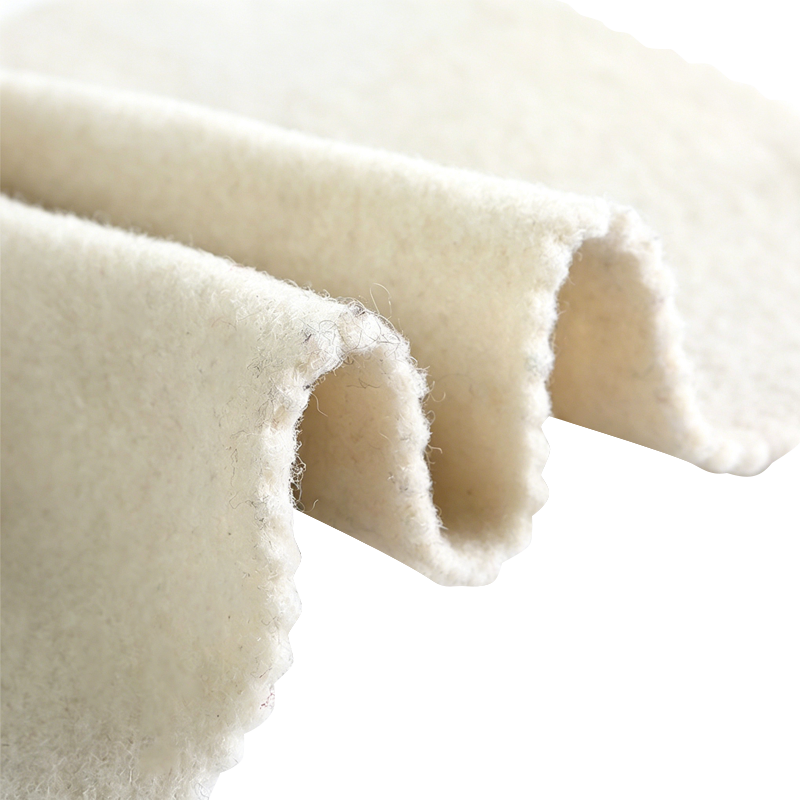
Unlike woven fabrics, which are produced from interlaced yarns in a grid pattern, nonwoven geotextiles are manufactured by mechanically or thermally bonding randomly oriented polypropylene or polyester fibers into a felt-like sheet. That random fiber orientation is not a manufacturing shortcut; it is the reason the fabric performs so well in filtration and drainage roles. The irregular pore structure allows water to pass through in multiple directions while still capturing fine particles at the surface and within the fabric matrix, a mechanism engineers refer to as depth filtration.
This article looks at how that mechanism translates into measurable performance data, where nonwoven fabric outperforms woven alternatives, how installation crews typically sequence the work, and which technical parameters should guide product selection for a specific soil and drainage condition.
How Fiber Structure Controls Filtration and Drainage Behavior
The performance of any geotextile in a drainage or separation role is governed by three interacting properties: apparent opening size (the largest particle that can pass through the fabric), permittivity (the rate of water flow perpendicular to the fabric plane), and in-plane transmissivity (the rate of water flow within the fabric plane itself, relevant for drainage composites and edge drains).
In needle-punched nonwoven fabric, mechanical needling pulls fibers through the sheet thickness, creating a three-dimensional lattice with a relatively large void ratio, often in the range of 70 to 85 percent. That open structure is what gives nonwoven fabric its characteristically high water flow rate compared to woven monofilament or slit-film alternatives, which rely on the fixed gaps between yarns and therefore have a narrower, more uniform opening size.
The tradeoff is that nonwoven fabrics generally offer lower tensile strength per unit weight than woven fabrics of comparable cost, which is why specification sheets separate the two families by intended function: woven fabrics dominate reinforcement applications under high tensile load, while nonwoven fabrics dominate filtration, separation, and drainage applications where flow-through capacity and soil retention matter more than raw strength.
Smaller apparent opening sizes generally mean better fine-particle retention, which is why heat-bonded nonwoven fabrics and drainage composites are common choices in silty or clayey soils where woven alternatives would allow excessive fine migration over time.
Permittivity and Long-Term Flow Behavior Under Load
Permittivity, typically expressed in reciprocal seconds, measures how readily water crosses the fabric plane under a given hydraulic head. This is the single most cited property in drainage-focused specifications because it directly predicts whether a fabric can move water away from a structure fast enough to prevent pore pressure buildup.
Laboratory testing on needle-punched nonwoven samples consistently shows permittivity in the range of 1.0 to 2.2 per second for lighter weights (135 to 200 grams per square meter), dropping to 0.5 to 1.0 per second for heavier, denser fabrics used under higher confining pressure. The relationship is not linear: as thickness and fiber density increase, tortuosity of the flow path increases as well, which reduces permittivity even though total void volume may be similar.
For field applications, this means specifiers should not treat permittivity as a fixed catalog number. A fabric rated at 1.8 per second in a light-confinement laboratory test may transmit water at a meaningfully lower rate once installed under two meters of compacted aggregate. Long-term flow capacity, sometimes tested under sustained load per ASTM D5493-style procedures, gives a more realistic picture for permanent drainage structures such as landfill caps or retaining wall backfills.
A useful reference point from a mid-sized highway subbase project: fabric selected with an as-manufactured permittivity of roughly 1.5 per second maintained a long-term in-service flow rate above 0.9 per second after eighteen months of monitoring, well above the 0.2 per second threshold typically required to prevent pore pressure buildup during peak rainfall events in that region.
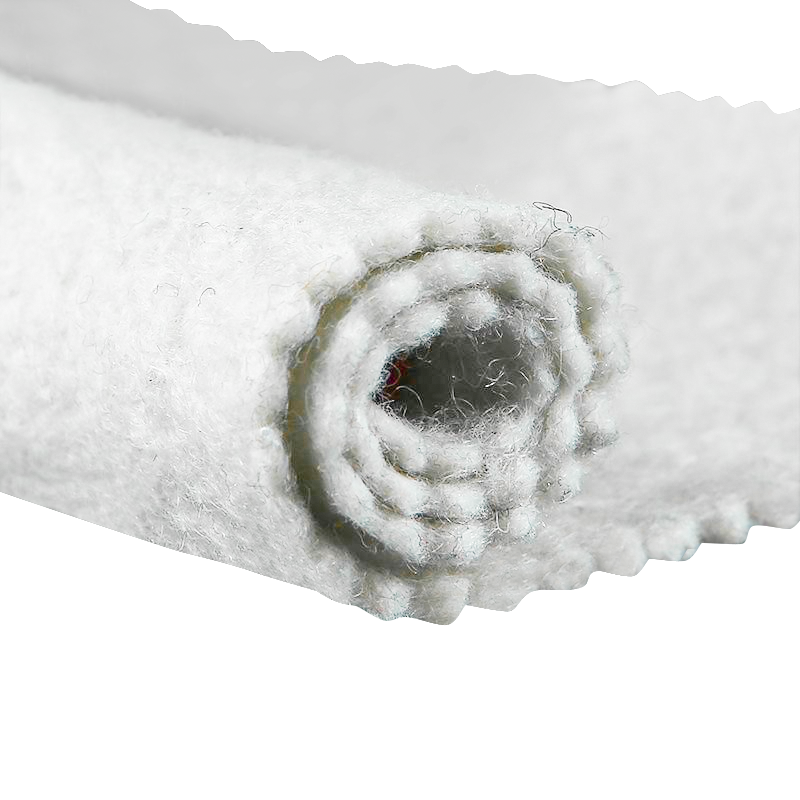
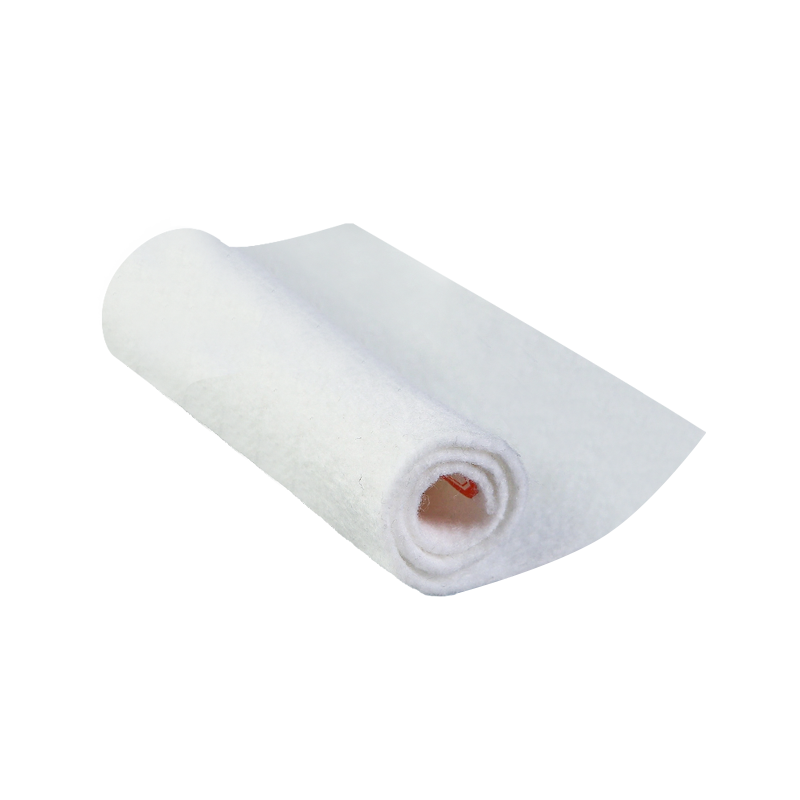
Needle-punched nonwoven fabric being prepared for a drainage and separation installation.
Nonwoven vs. Woven Fabric: A Side-by-Side Performance Comparison
Choosing between nonwoven and woven fabric is rarely about which product is universally better; it is about matching fiber structure to the dominant stress the fabric will experience on site. The radar comparison below summarizes five criteria that recur most often in specification decisions.
Practical takeaway: nonwoven fabric leads on permittivity, soil retention, and installation ease, which is why it dominates separation and drainage layers. Woven fabric leads on tensile strength, which is why it remains the default in reinforcement layers under embankments and steep slopes.
Core Applications Across Civil and Geotechnical Projects
The same filtration and drainage mechanism supports a wide range of end uses, though the required fabric weight and opening size shift depending on the soil gradation and expected hydraulic load.
| Application | Primary Function | Typical Weight (g/m2) | Key Benefit |
|---|---|---|---|
| Roadway and Railway Subbase | Separation between subgrade and aggregate | 150 - 200 | Prevents aggregate contamination and rutting |
| French Drains and Edge Drains | Filtration around perforated pipe | 135 - 180 | Sustains long-term flow without clogging |
| Retaining Wall Backfill | Drainage behind wall face | 200 - 270 | Reduces hydrostatic pressure on structure |
| Landfill Cap and Liner Systems | Protection layer over geomembrane | 270 - 400 | Prevents puncture from stone and equipment |
| Erosion and Sediment Control | Soil stabilization on slopes | 120 - 200 | Limits surface soil loss during rainfall |
| Agricultural Subsurface Drainage | Filtration around field drain tile | 100 - 150 | Maintains drain capacity across seasons |
How Installation Sequencing Affects Long-Term Performance
A specification sheet only describes potential performance; actual field performance depends heavily on installation discipline. Fabric that is torn during placement, seamed with insufficient overlap, or compacted without protective aggregate cover can underperform its laboratory rating significantly.
- Grade and compact the subgrade to remove sharp protrusions that could puncture the fabric during aggregate placement.
- Roll out fabric in the direction of anticipated equipment travel, keeping it loose enough to conform to minor surface irregularities.
- Overlap adjacent panels by at least 300 to 450 millimeters on flat ground, increasing to 600 millimeters or sewn seams on soft or uneven subgrade.
- Place the first aggregate lift by end-dumping and spreading from the edge of the fabric rather than driving equipment directly on unprotected fabric.
- Maintain a minimum lift thickness of 150 millimeters before allowing compaction equipment to pass over the fabric-protected area.
Field audits on drainage retrofit projects have repeatedly shown that panel overlap and first-lift thickness are the two variables most correlated with premature drainage failure, ahead of the fabric specification itself. This underscores why installation quality control deserves as much attention as material selection.
Selecting the Right Fabric Weight and Opening Size
Selection should start with the soil gradation on site, not the fabric catalog. A soil retention ratio is typically calculated by comparing the fabric apparent opening size against the D85 particle size of the adjacent soil; a ratio of 1 to 3 is a widely used starting rule for filtration-critical applications, tightening toward 1 for gap-graded or uniform fine soils prone to piping.
Hydraulic gradient across the fabric is the second variable. Applications with steady, low-gradient flow, such as agricultural field drains, tolerate a wider range of permittivity values. Applications with intermittent, high-gradient flow, such as edge drains that see flash storm events, benefit from fabric with higher permittivity and a design safety factor applied to account for partial clogging over the service life of the installation.
Mechanical demand at the installation stage should not be overlooked either. Even in a pure filtration role, fabric needs enough puncture and grab tensile strength to survive aggregate placement without local tearing, since a torn section defeats the separation function regardless of how well the surrounding fabric performs.
A geotextile that meets every hydraulic requirement on paper still fails in the field if it cannot survive the mechanical stress of its own installation. Selection and construction sequencing are two halves of the same decision.
Testing Standards Commonly Referenced in Specifications
Project specifications rarely leave fabric selection to descriptive language alone; they typically cite standardized test methods so that submittals from different suppliers can be compared on equal terms.
- Water permeability and permittivity testing under constant head conditions
- Apparent opening size testing using calibrated glass bead sieving
- Grab tensile strength and elongation testing
- Puncture resistance testing to simulate aggregate impact during placement
- Ultraviolet stability testing for fabric exposed before final cover placement
- Long-term flow rate testing under sustained normal load for permanent drainage structures
Specifiers working on projects with strict environmental exposure, such as landfill covers or coastal drainage structures, often add gradient ratio testing to evaluate long-term clogging potential specific to the on-site soil rather than relying on generic catalog values alone.
Frequently Asked Questions
Q1: What is the main functional difference between nonwoven and woven geotextile fabric?
Nonwoven fabric is built from randomly bonded fibers, giving it high permittivity and strong soil retention, which makes it well suited to filtration, separation, and drainage roles. Woven fabric is built from interlaced yarns, giving it higher tensile strength, which makes it better suited to reinforcement under high load.
Q2: Can nonwoven fabric be used directly against fine clay or silt soils?
Yes, provided the apparent opening size is matched to the soil D85 particle size using an appropriate retention ratio. Heat-bonded nonwoven fabrics with finer opening sizes are generally preferred over lighter needle-punched fabrics when the adjacent soil is predominantly silt or clay.
Q3: How much overlap is required between fabric panels during installation?
A minimum of 300 to 450 millimeters on stable, flat subgrade is standard practice, increasing to 600 millimeters or stitched seams on soft, uneven, or high-traffic installation areas.
Q4: Does nonwoven fabric lose permeability over time once installed?
Some reduction from as-manufactured lab values is expected once the fabric is under confining load and exposed to fine particle migration. This is why long-term flow rate testing under sustained load gives a more reliable design value than short-term permittivity alone.
Q5: What fabric weight is typical for a residential French drain project?
Most residential drainage applications use fabric in the 135 to 180 grams per square meter range, balancing sufficient flow rate with enough mechanical durability to survive hand installation and gravel backfilling.
Contact Us
Your email address will not be published. Required field are marked*
Categories
- Company News(3)
- Industry News(8)

Contact Us
1337540116@qq.com